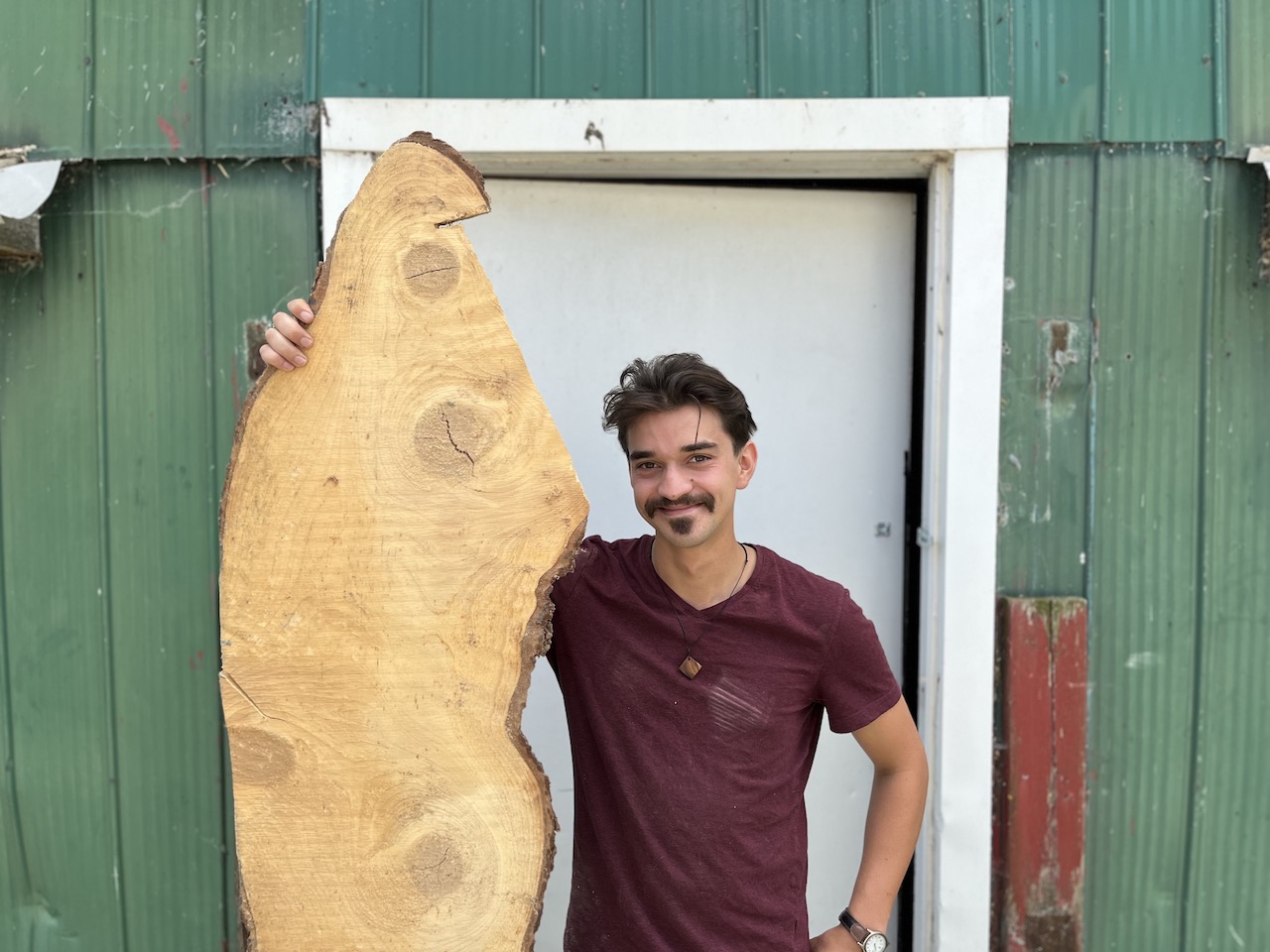

What is the distinction between made and grown?
Timmerwerk, a workshop by artisan Will Daize, creates pieces with this question in mind. Through Will’s veneration of nature and the work of his hands, the natural materials of wood, iron, and stone coalesce calmly, harmoniously into human-made forms.

Pieces ranging from intricate inlaid necklaces to briefcases, tables, cabinetry, and even full restaurant interiors, reflect both technical skill and humility. Will’s craft feels grown. These pieces are as much about artistry as they are about functionality and when to say when.
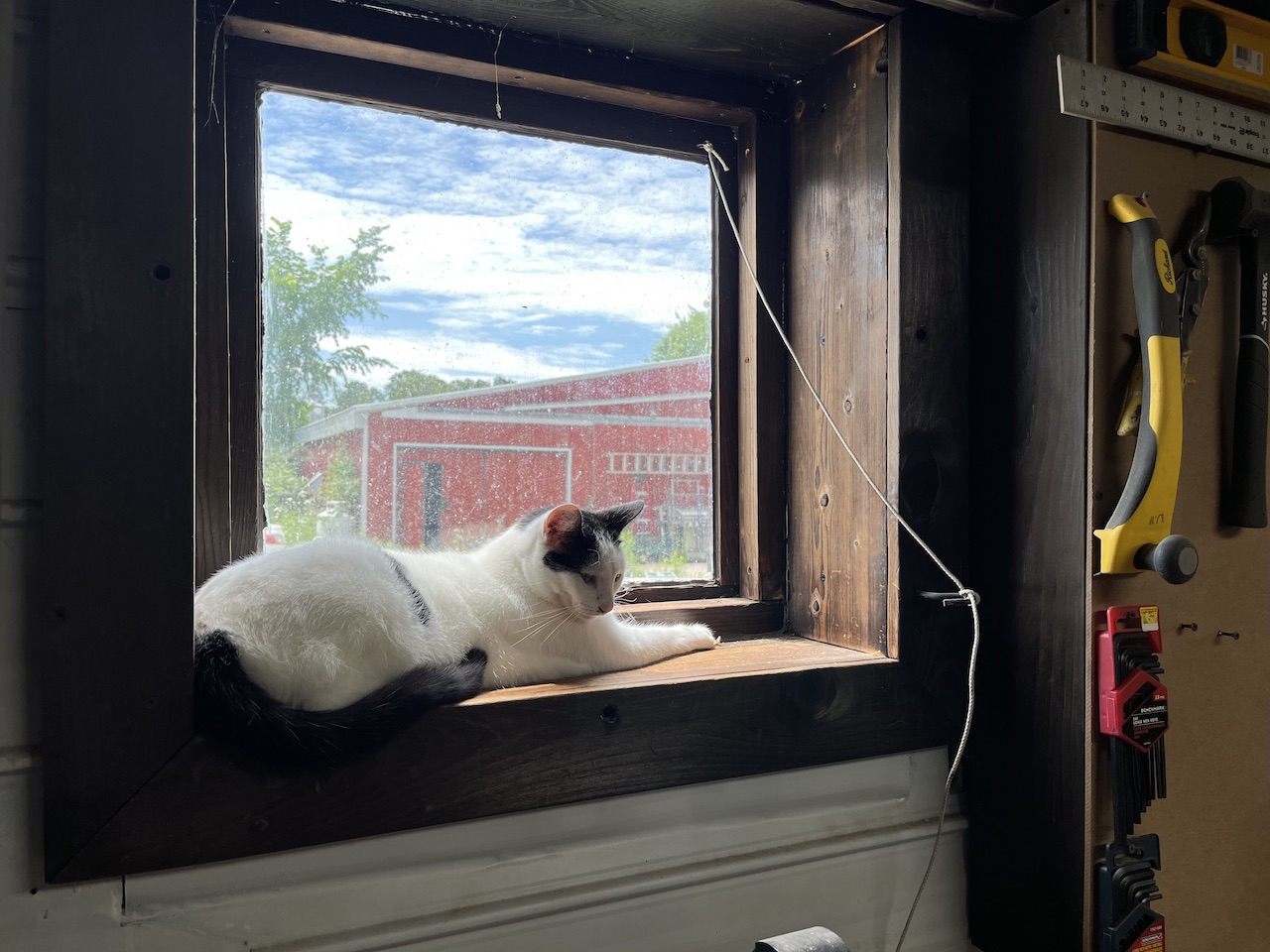
I visited Will at his workshop housed in a thoughtfully renovated former chicken barn surrounded by woods and fields near the village of Holstein. The space, with its natural light and rustic charm, is as much a part of the creative process as the tools he uses. There’s even a barn cat on the windowsill.
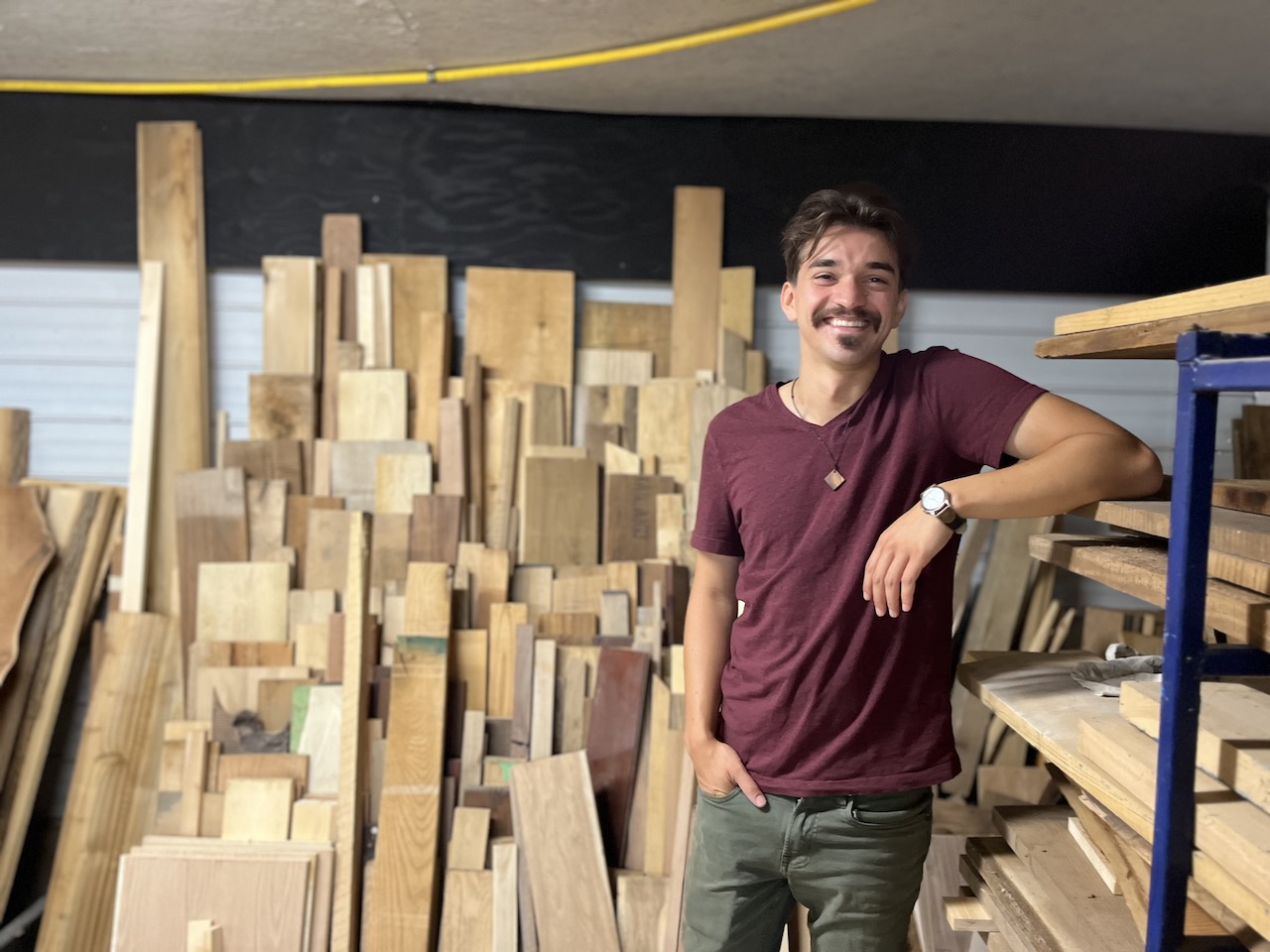
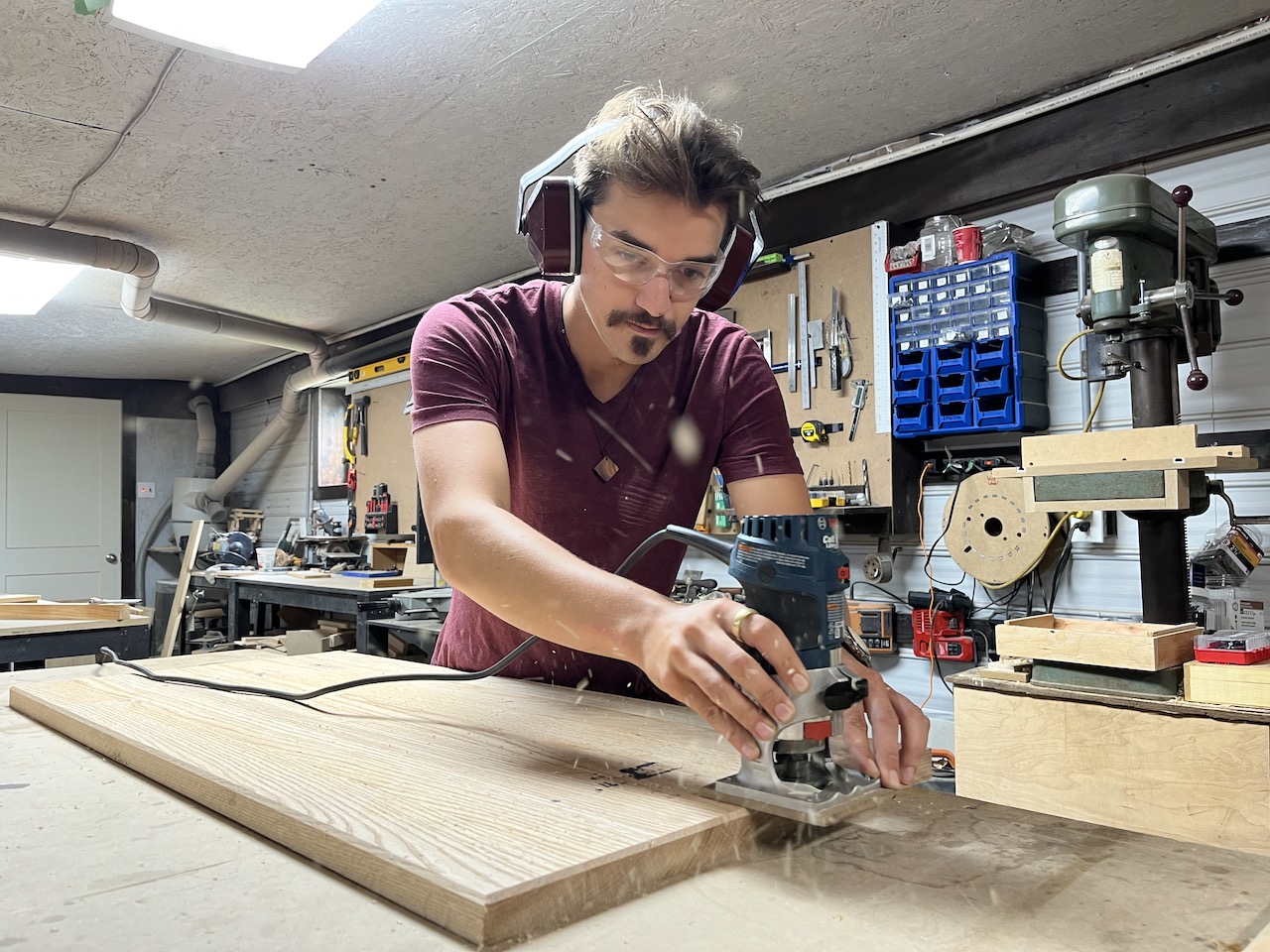
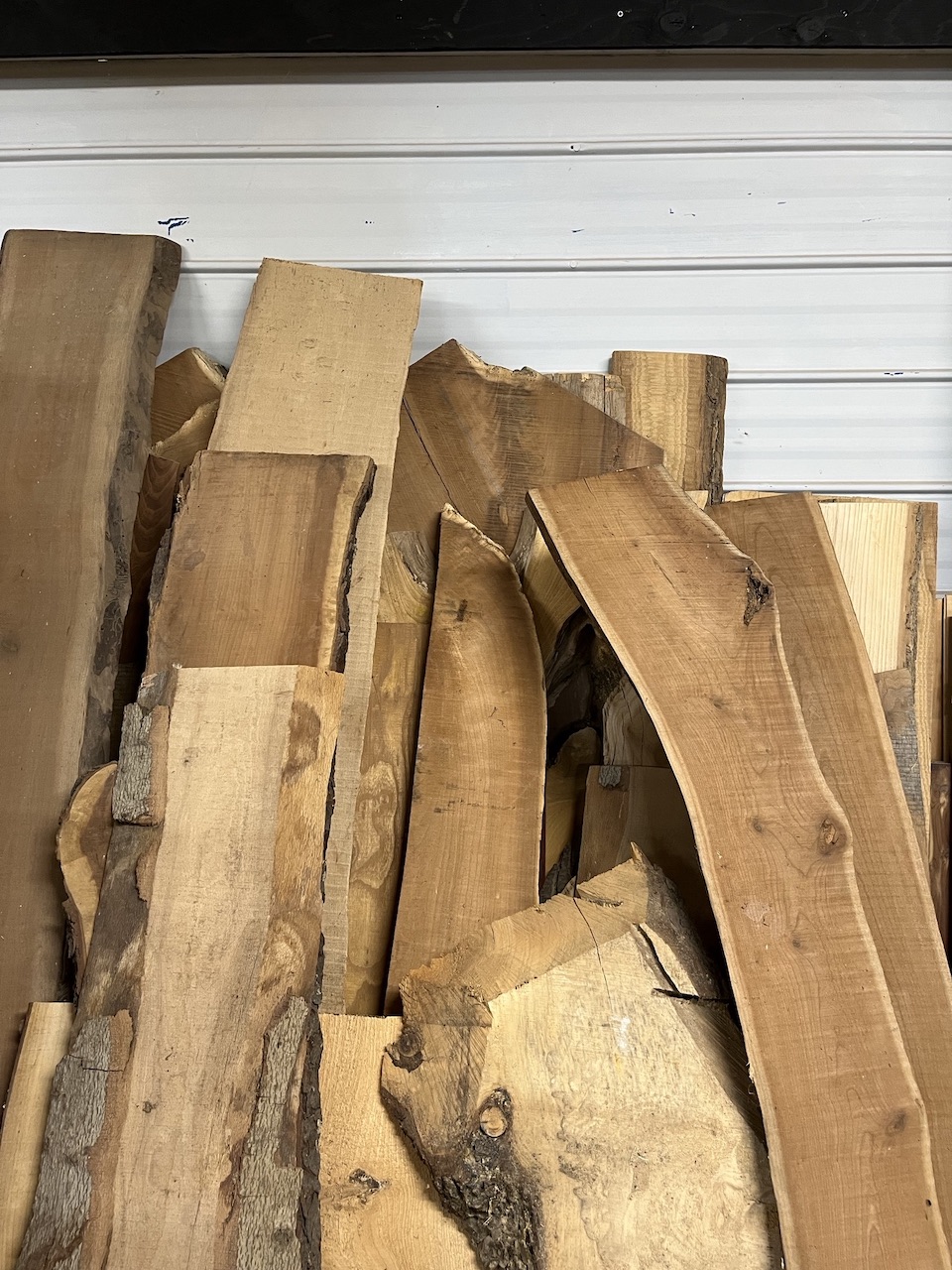
Inside, the shop is organized for flow and ease of creation right down to the dust extraction system built by Will himself. Several organized woodpiles stacked with cherry, maple, walnut, and sumac wait patiently for transformation. For Will, each piece of timber is an opportunity to connect with nature’s resilience and beauty.
“Being in nature is part of who I am,” he says. “The trees, the landscape, it all informs what I do.
He explains that grain, knots, spalting, and flame-like patterns in the planks are evidence of the tree’s journey, its ability to adapt and overcome challenges. An artisan woodworker should embrace the imperfections in their materials, seeing in them the strength and character that the tree’s decisions have imparted.
“When you pick up a piece of wood, you’re looking at a record of the tree’s decisions,” he says, running his hand over the bark of a live edge plank of ash. “A tree is always thinking, ‘what’s the most efficient way for me to grow?’”
Descended from a long line of wooden shipbuilders from the island of St. Vincent, Will has a strong connection with wood and building. His ancestors are craftsmen who felled rock-hard tropical trees themselves and fashioned them into seafaring vessels. For Will, each project -whether it’s custom furniture, cabinetry, or even attaché cases with intricate wood inlays – is an opportunity to honor his heritage while also forging his own path. His goal is to create pieces that will last, just as the ships his ancestors built were designed to endure.
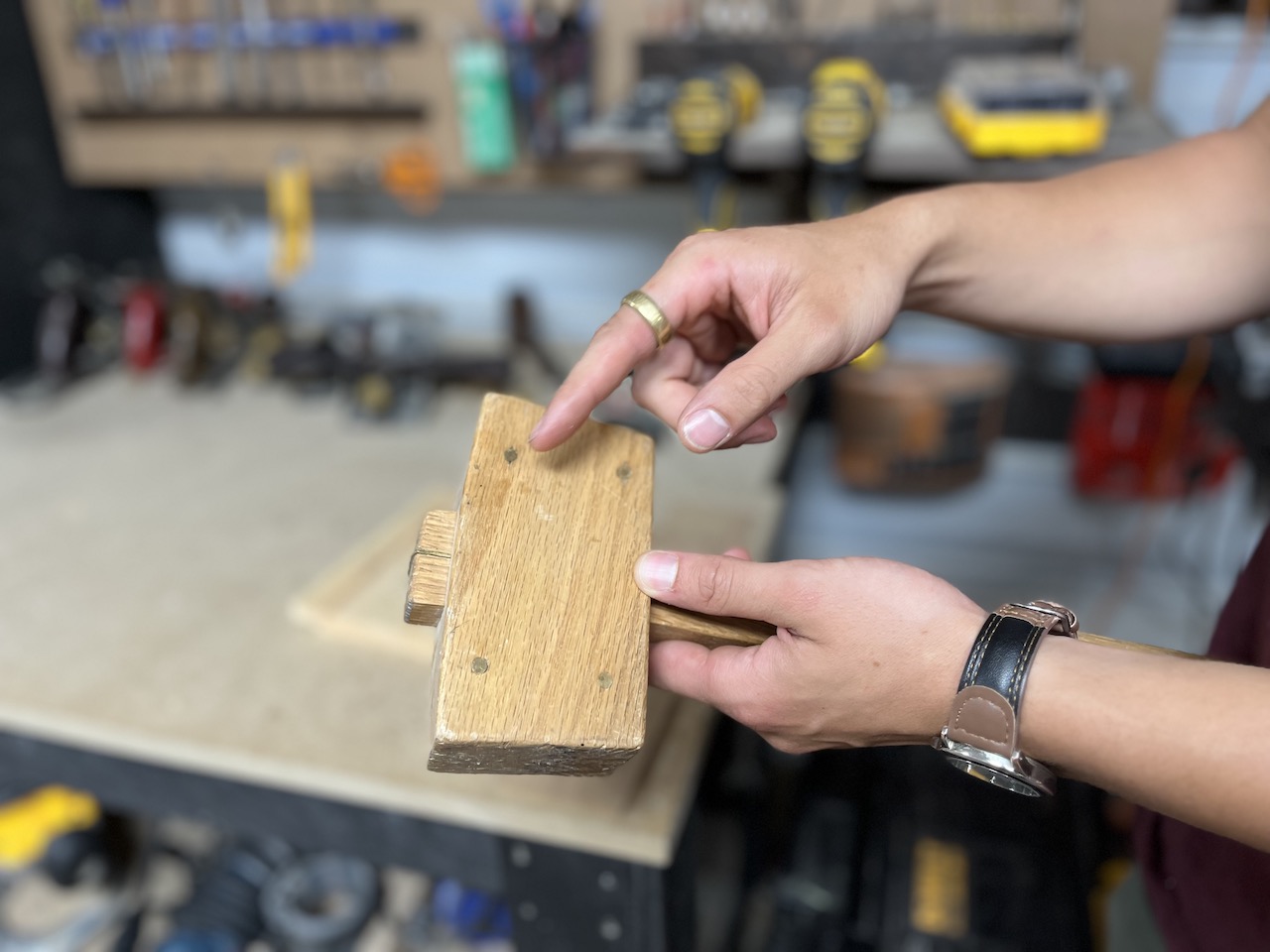
At Timmerwerk there is a balance of the cerebral with the natural, force with ease. Will uses high powered modern machinery, like a table saw and jointer, as well as hand tools, many of which he has made himself – like his collection of handmade brass planes and wood mallets, each method serving its purpose in the process. It’s a fluid combination of power and precision, where the rawness of the machine is met with the gentleness of handcraft.
His recent work on the interior of Naagan, an award-winning restaurant by Chef Zach Keeshig, has gained significant attention, and for good reason. The restaurant exemplifies Will’s ability to harmonize the needs of a space with the vision of a client, and then to embody this in the form and function of natural materials. The space features live-edge tables with hand-forged metal legs, granite countertops and natural stone features, each piece embodying Will’s love for both the material and the craft. The natural variations in the wood and the strength of the metal create a space that feels rooted in the land.
“It’s about creating something that feels grounded, that has both history and a future,” says Will.
A connection to nature shows in everything he makes. I observe this in a custom cabinet that Will is building from quartersawn oak – there’s precision in each joint, and yet the piece is softened with hard edges planed down by hand just slightly. Elsewhere in the shop, a live-edge table top connects to the ground via hand forged iron legs that extend out to mee the ground like roots. The hammer marks tell of a different art.
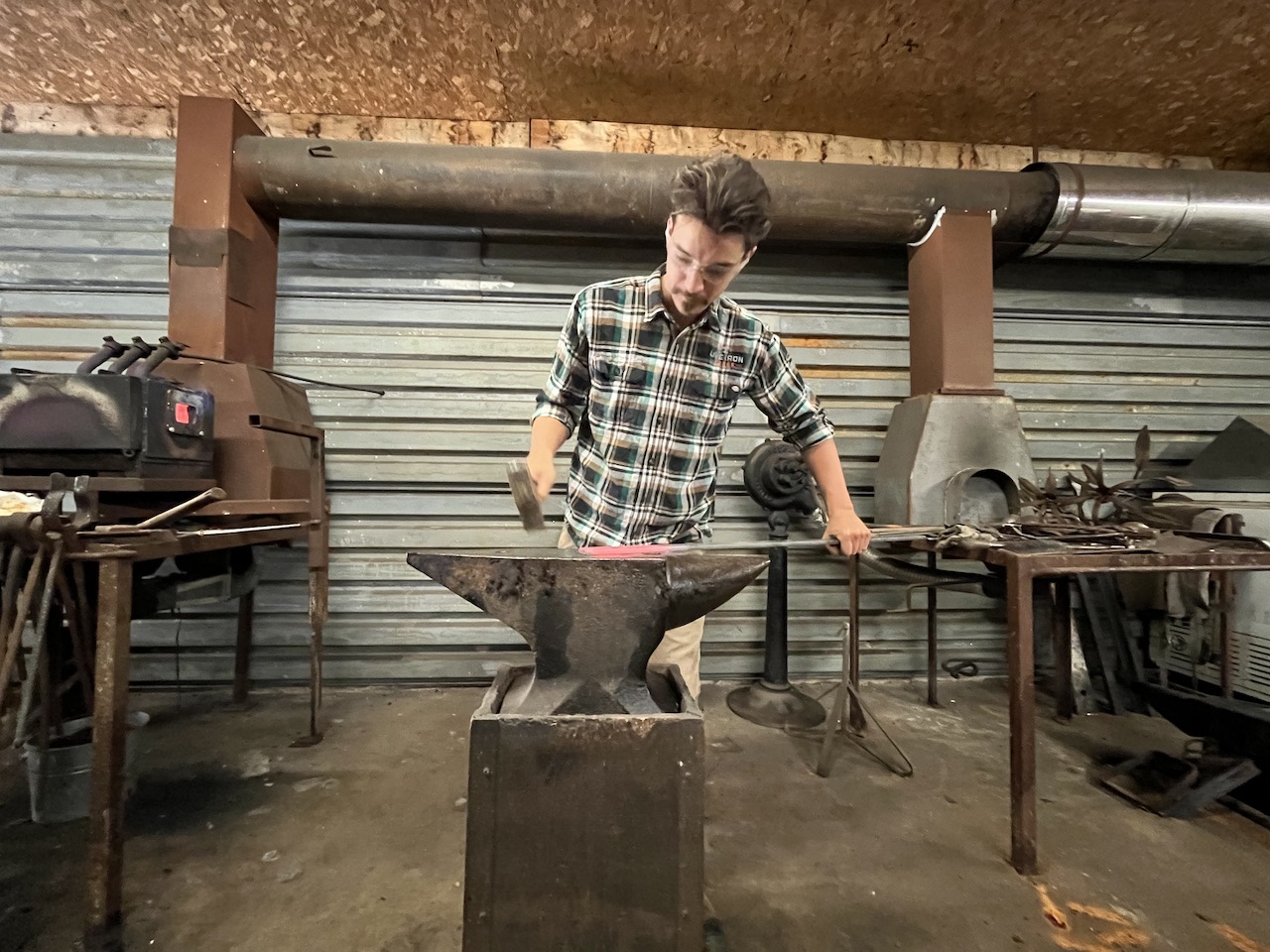
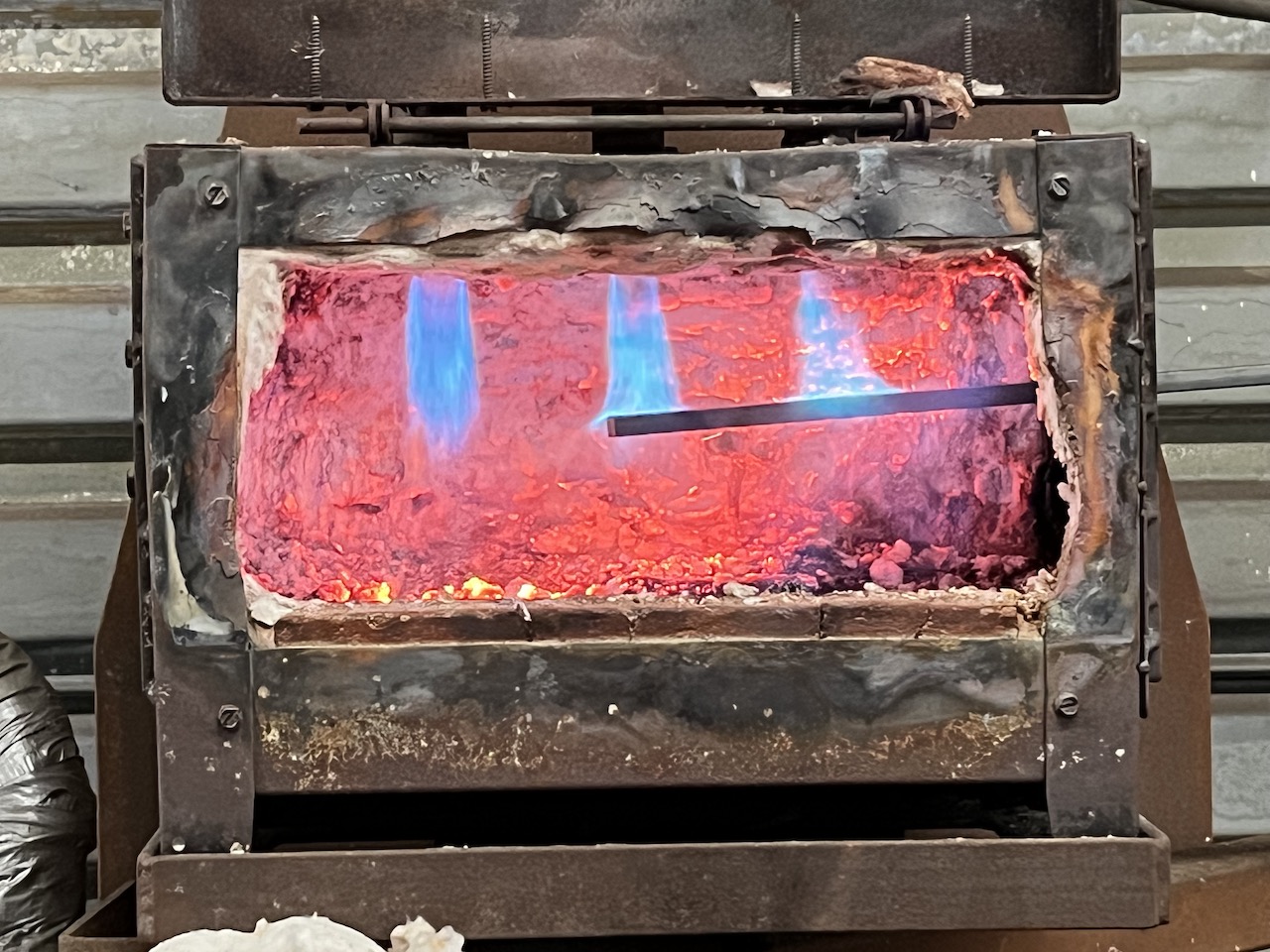
Curious to see how he works with metal, I follow him over to the blacksmith shop in an adjacent barn. In this place, metal is shaped by heat and hammer. Will fires up a propane forge and suits up in his blacksmith gear.
“In the woodshop or the forest, it’s like a church choir – but here in the blacksmith shop, it’s death metal,” he jokes.
The craftsman transitions from the natural flow of wood to the intense, red-hot forge. His attention sharpens as the metal heats up; his movements becoming more deliberate, more precise.
“It’s like switching gears,” he explains. “You have to tune in to each material. Metal speaks in its own way. It’s all about getting in sync with it. Metal won’t just do what you want it to do.”
The forge glows red hot. Will stares into the furnace and pulls out piece of hot iron with a big pair of tongs, deftly placing it on an anvil. Each strike of the hammer coerces the metal into its form. With enough heat and force, it finally relents and relaxes into the gentle curve of a table leg, soon ready to join mellow wood.
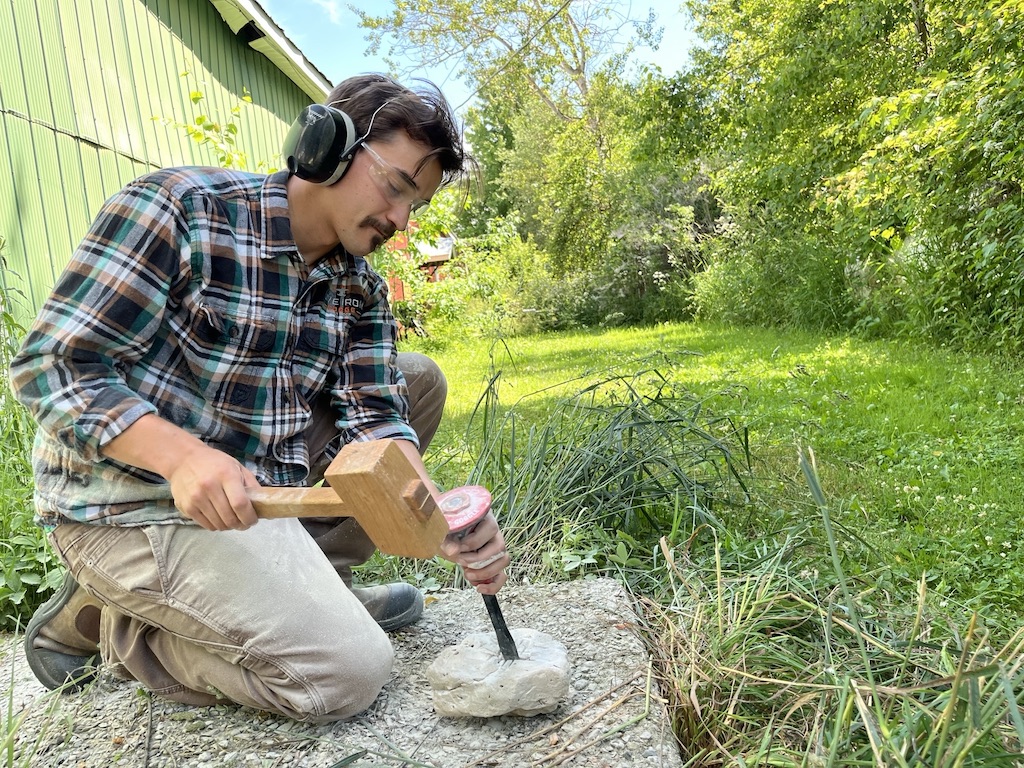
As we head outside to cool down in the shade, he sets about shaping the stone into part of a table base. Safety gear on and grinder in hand, he works the limestone into smooth, straight surface.
He tells me about his interest in Shou Sugi Ban, an ancient Japanese wood-burning technique that darkens and preserves wood. The technique gives each piece a unique, striking finish – part natural beauty, part endurance through transformation. For Will, it’s another way to explore what wood can become, adding depth and character to his craft. Like his work with metal, Shou Sugi Ban requires patience and focus, transforming wood into something that’s not just functional but meaningful.
Beyond his own craft, Will is passionate about planting seeds for the next generation of makers. He works with local school boards and the Hanley Institute in Flesherton, nurturing creativity in young people, passing on the skills and philosophies that have shaped his own journey.
“It’s important to teach young people how the trades work, how the materials speak to you,” he says. “When you teach them about wood or metal, you’re teaching them something that connects them to the world in a very real way.”
Timmerwerk is a living expression of Will’s connection to nature and to his craft. Each project, from a piece of delicate jewelry through to an entire fixtured space, is imbued with his character. Will’s creations are functional, beautiful and natural – crafted in respect of the client, the materials and The Great Maker. The craft of Timmerwerk is at once both grown and made.
Article and photos by “Museum Rob” Iantorno