
Introduction
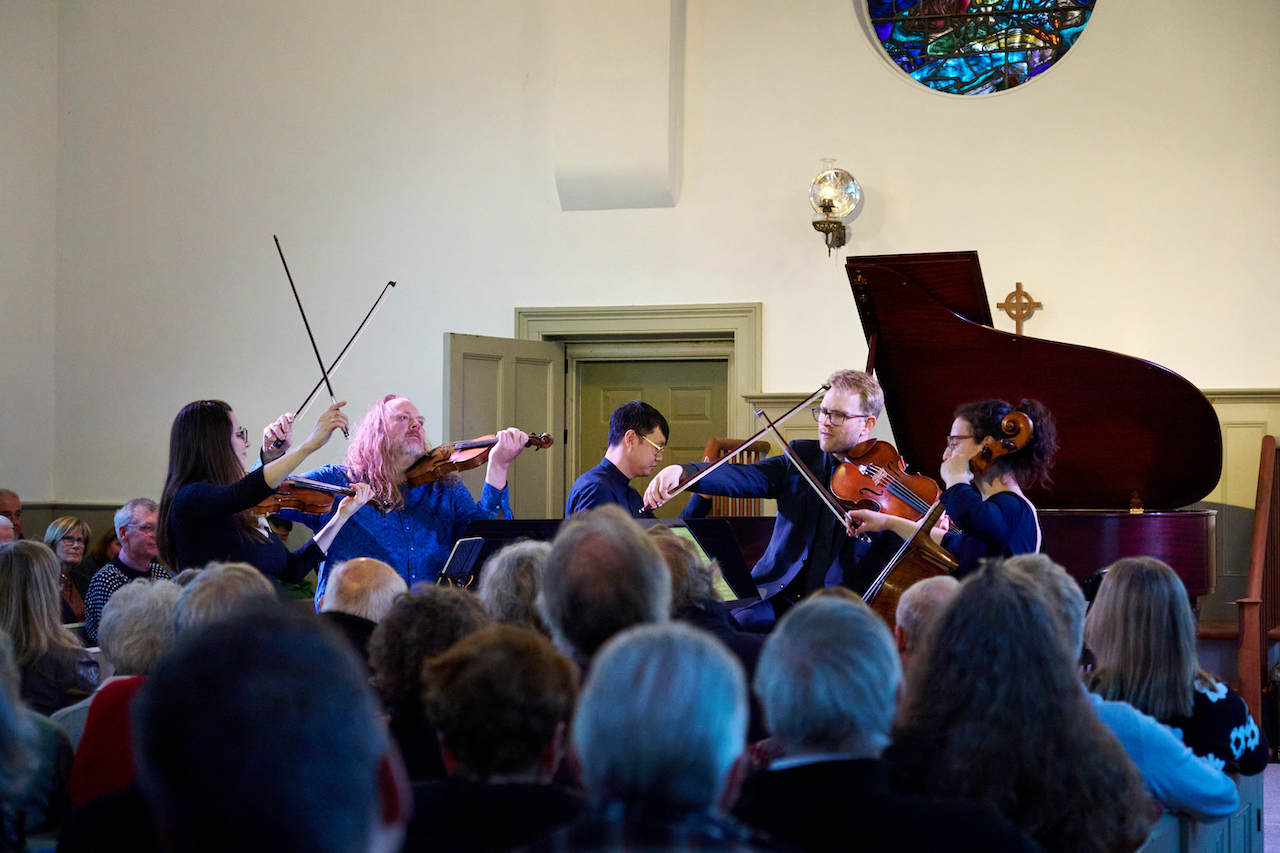
Welcome to the Sound Tech Series, where we are turning the spotlight from your local stages toward the people who shape live music long before the first note is played and long after the last chord fades.
Well executed live music rarely happens by chance; behind every crisp vocal, every seamlessly balanced mix, and every moment where a room seems to breathe in time with the music, there is someone working in shadows of the sound booth, listening, adjusting, and anticipating.

This series takes a closer look at the sound engineers who have helped to define live music across Grey, Bruce, and Simcoe, often without the recognition they deserve, and almost always without applause – content to let the performance speak for them. For many of the people who work behind the board, recognition has never been the goal. That quiet pride is part of the culture, and it is written into the rooms themselves.
It is in these quiet details that the spirit of the work reveals itself. We dedicate the Sound Tech Series to Nathan Wagler, a deeply respected figure in the Owen Sound music community and a steadfast champion of live music.
Since 2020, Nathan’s photograph has remained in place at the sound booth at Heartwood Concert Hall, a silent but powerful reminder that some of the most important contributors to live music are rarely seen yet never forgotten. This series will shed some light on those perfecting the art from sound boards in and around your community!
Steve Meacher
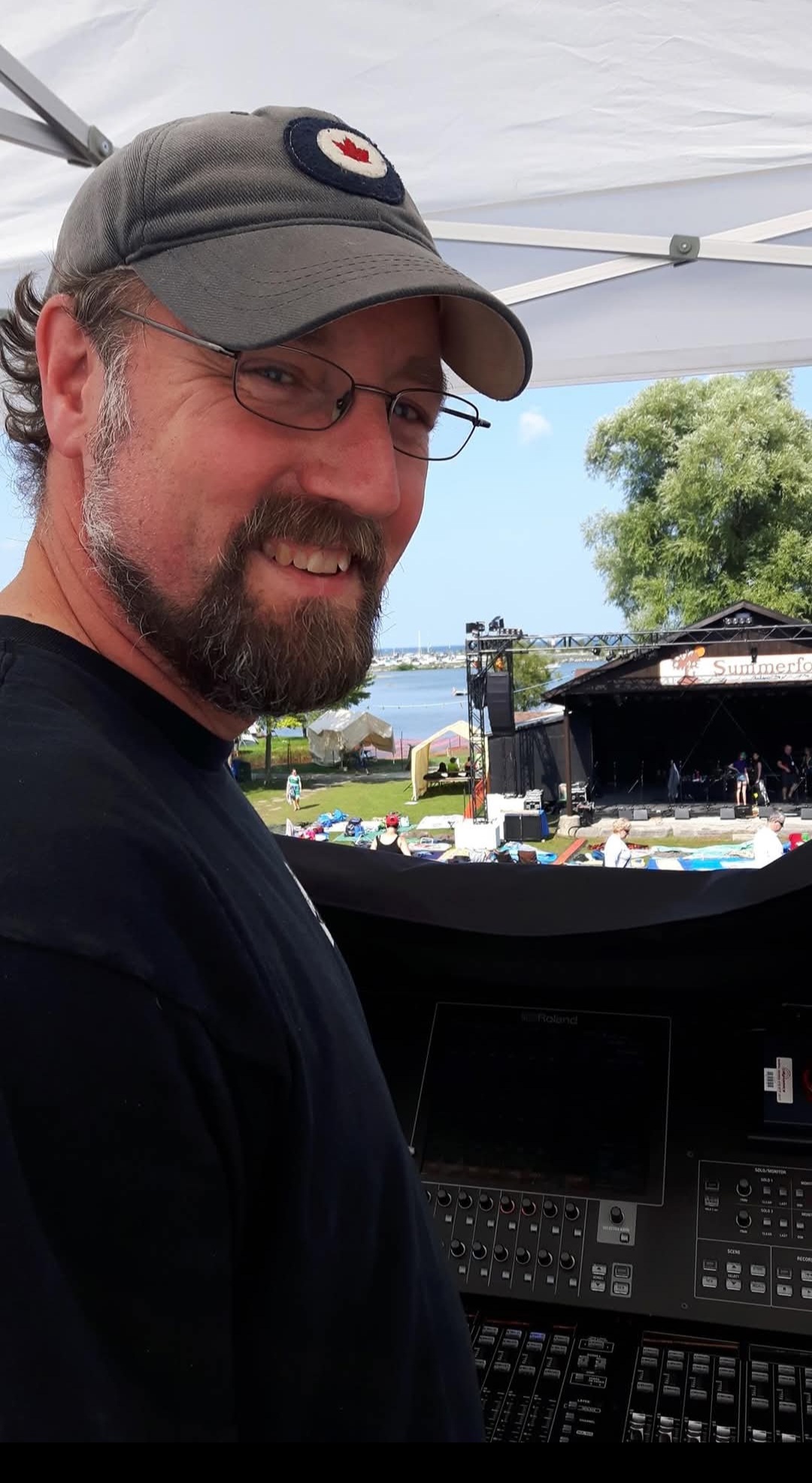
In Owen Sound, where live music is plentiful and deeply woven into the community, Steve Meacher is a familiar presence, having spent decades shaping the sound of local stages.
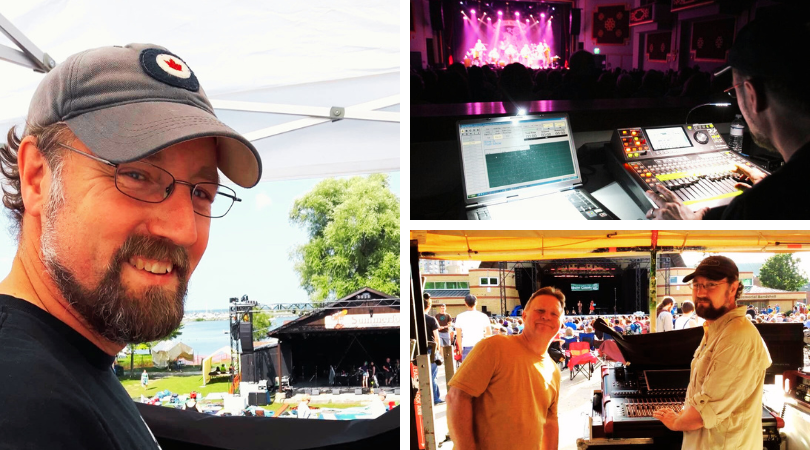
From Long & McQuade’s to Summerfolk to Heartwood Hall, Steve has become a staple in the Owen Sound music scene. He makes sure that the band you’re seeing sounds great, and for that, he’s one of the unsung heroes that goes by the title ‘sound tech’.
His path to the sound booth is long and interesting. A young Steve was first desperate to be a drummer and learned guitar before developing a growing fascination with the technical side of live performances.
In 1979, while still in high school, Steve began working his first live gigs, and by 1985, he was working professionally as a sound engineer. His first major tour followed a few years later, in 1988, when he joined The Good Brothers on a demanding cross-country run that included the Olympics.
The band performed at FANfest at Olympic Park, a free public event where artists delivered short, high-profile sets for large crowds. The pace was relentless; rapid setups, constant tear downs, hauling gear, and all under tight timelines. The tour’s lasting impact was the discipline it demanded, but it set the course for Steve’s career.
He went on to collaborate with artists such as Derek Rutan, Grapes of Wrath, Spirit of the West, the Irish Rovers, and David Thomas. Steve built a reputation for versatility across genres, engineering sound for all variations of performances.
Among his favourite long-term projects, lasting nearly eighteen years (including a tour to Alaska), was Jeans ’n Classics, a group known for reimagining classic rock with orchestral ensembles. One performance in particular holds space for him.
“They played an encore where the solo from their rendition of Stairway to Heaven was performed entirely by the string section,” he says. “They took a classic and put the audience in awe.”
Another defining memory came at the Home County Music Festival, with Ian Tamblyn.
“Just as he began the final set of the evening, the skies opened up with a downpour of rain, but not one person left… just a sea of umbrellas popped up and the show went on,” he recalls. It was a reminder that when the sound is right, the moment could hold forever.
“Each show is a new puzzle to solve, but the really challenging ones make the best stories”
Other memorable experiences surprisingly came from technical challenges. At a festival in Toronto, he was tasked with mixing a rock’n’roll set featuring seven hammer dulcimers using equipment for a traditional rock band.
“The mismatch was wild; I had to figure it out quick, but in the end, it was like nothing you’ve ever heard before,” he says.
In the early 1990s, Steve became closely tied to the festival circuit. Around 1992, he started at Summerfolk Music & Crafts Festival, handling main-stage lighting and assisting with assembly under Steve Darke, another OG technician in Owen Sound’s music history.
Back then, sound systems were mounted manually – speakers lifted into place by hand before cranes became standard. As responsibilities grew, Steve moved into tuning systems and lighting, eventually taking on front-of-house sound when Darke passed the torch in the early 2000s.
Steve’s work during that era was shaped by Rocky Mountain Audio, where he worked alongside Bill Girdwood, affectionately known as “the world’s tallest freestanding tour manager” standing at six foot seven inches. Rocky Mountain serviced major festivals including his home festivals of Summerfolk, Goderich Celtic Roots, and Home County Music & Arts, among others. When Rocky Mountain later closed, production arrangements passed through several hands before Summerfolk began contracting Steve directly, a reflection of the reputation he had built.
As Steve’s festival work evolved, so did his relationship with Heartwood Concert Hall in Owen Sound. He initially assisted with setup and tuning, later covering shows when Nathan Wagler could not, and eventually became a steady presence behind the sound booth.
“What I like most about Heartwood is its unpredictability,” says Steve. “No two nights are ever the same…one night it’s high-energy performances from bands like Higher Function then on others, it’s calm and serene like Sweetwater Music Festival.”
His first time mixing My Son the Hurricane, a brilliant ensemble that pushed both space and technical limits was “chaotic but so much fun as the night came together.”
“Each show is a new puzzle to solve, but the really challenging ones make the best stories” he says. “You can never judge a band by the PA system alone… it could just be the perfect equation to make some magic.”
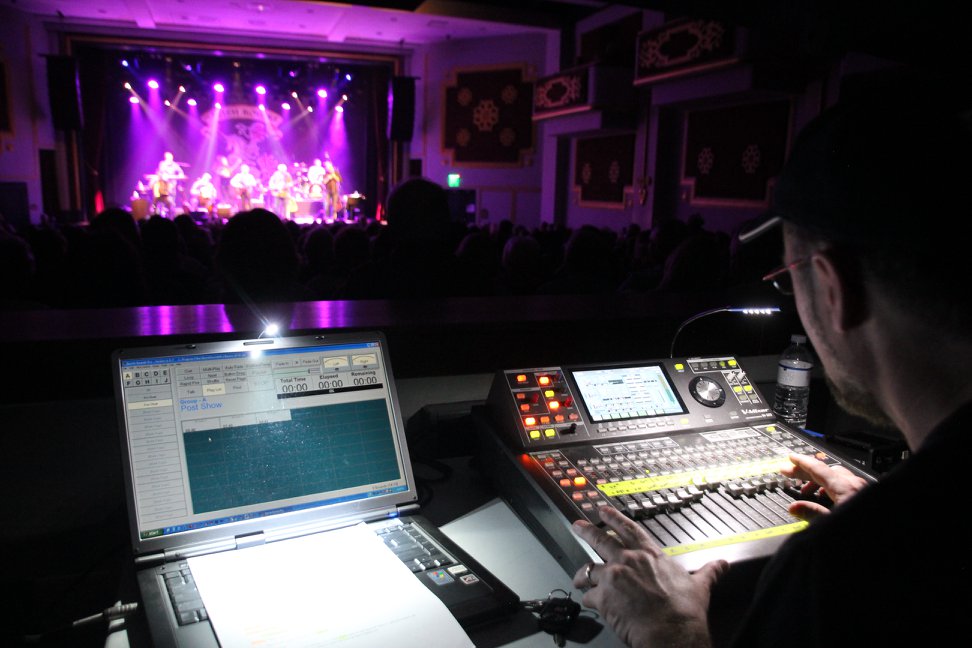
Steve found that the most fulfilling moments were when sound, space, and performance came together just right. “There was a Christmas performance with Coco Love Alcorn that was beautiful… everything simply worked,” he says.
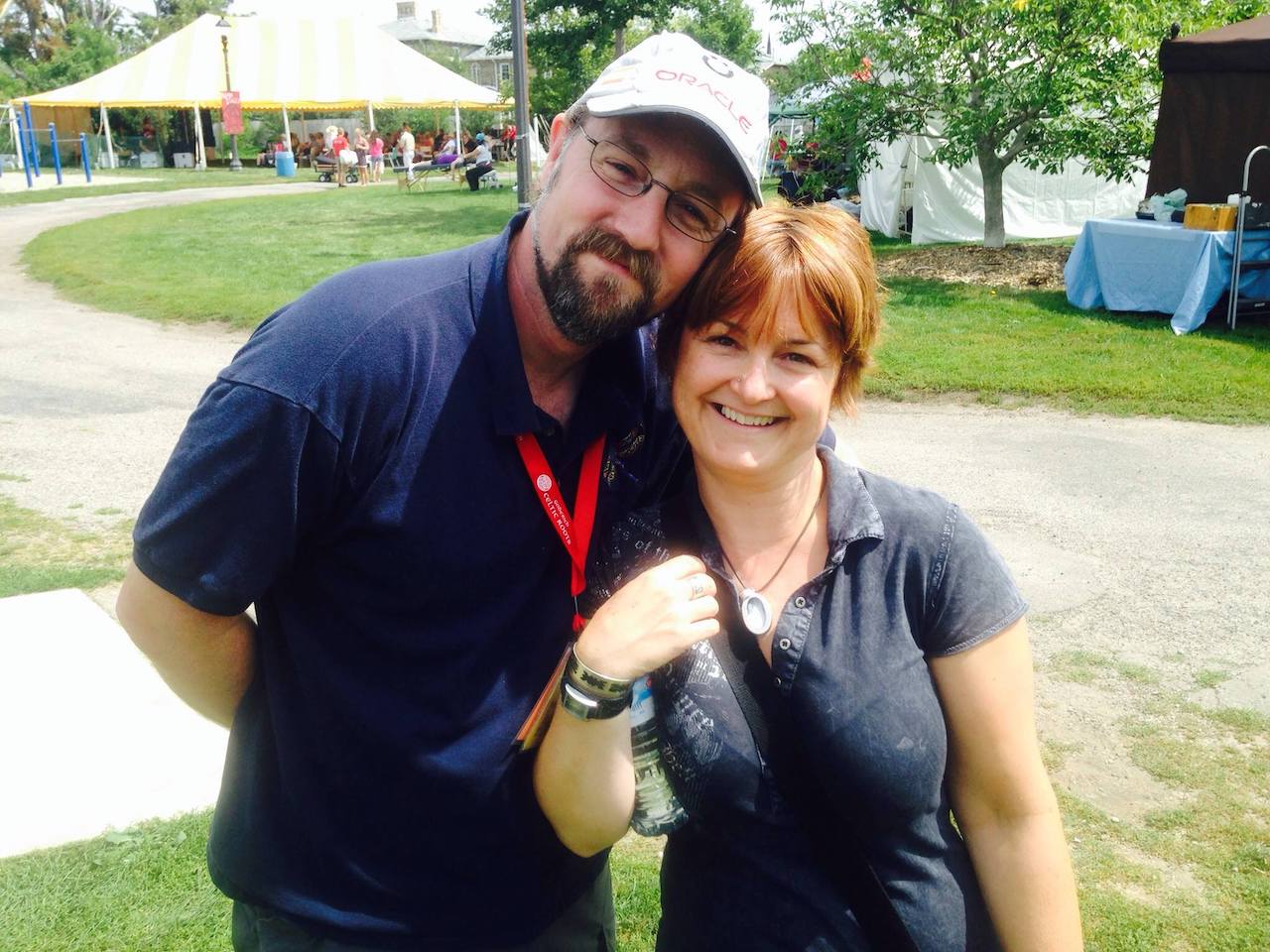
Life on the road was demanding. “Home was wherever the gear happened to be, and it was messy,” he says, noting it took a toll on relationships. Still, he formed lifelong friendships along the way, and even met his wife while she sang with Brian Pickel in Goderich.
I first met Steve while volunteering on the tech crew at the Over the Hill Stage at Summerfolk in my younger years, a place we find reunion each year. I love hearing his mixes every now and then through his headset when I’m at Heartwood.
In 2018, he stepped back from touring and found work at Long & McQuade’s, keeping in the music industry while staying closer to home. He continues to expand his musicianship and has even taken up bass.
These days, Steve continues to work his home festivals along with a wide range of events throughout the region.
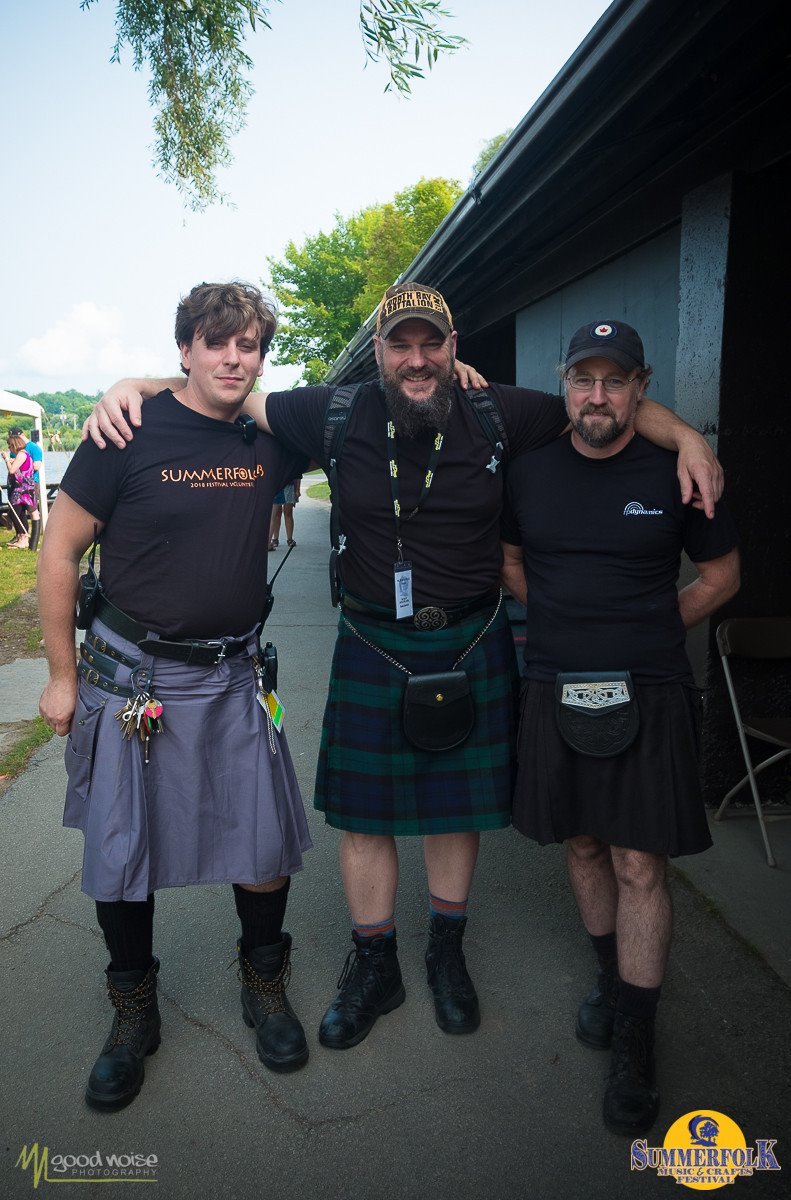
Quietly and consistently, Steve Meacher’s work has shaped our local musical atmospheres, his imprint lying in the music that lingers and shows that sound just right. Say hi to Steve next you see him doing his thing – on weekends at Heartwood, helping with your instrumental needs at Long and McQuades, or even on kilt day at Summerfolk!
Words by Ashley Winters
Photos provided by Ashley Winters and Steve Meacher