
There are many curious places in this region of ours. The Polish Tree in Meaford Township is one of them.
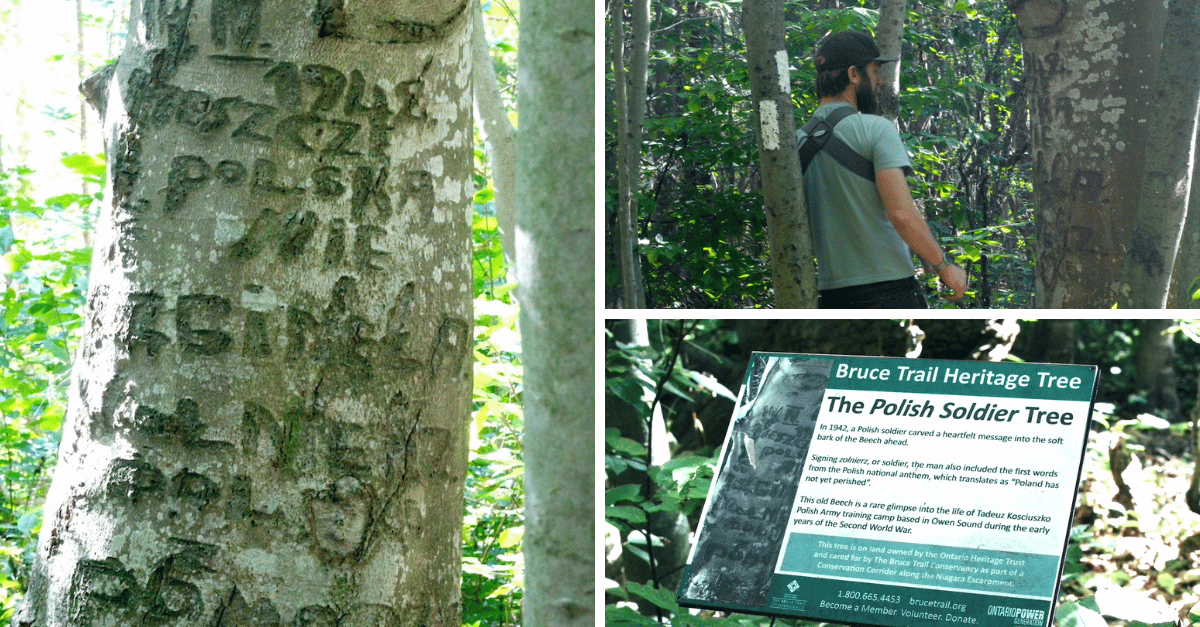
If you spend enough time hiking the local Bruce Trail sections like I have, you might just stumble upon a beech tree with some interesting etchings in it, like I did. At first you might think it’s the carvings of a punk kid confessing their love for Becky in a juvenile effort, but when you look a little closer, you’ll realize the carvings have been there awhile. Like a long while. And you can’t even read what it says. That is, unless you speak Polish.

You might think to yourself: this is odd. Who could have carved this here? And when? And why?
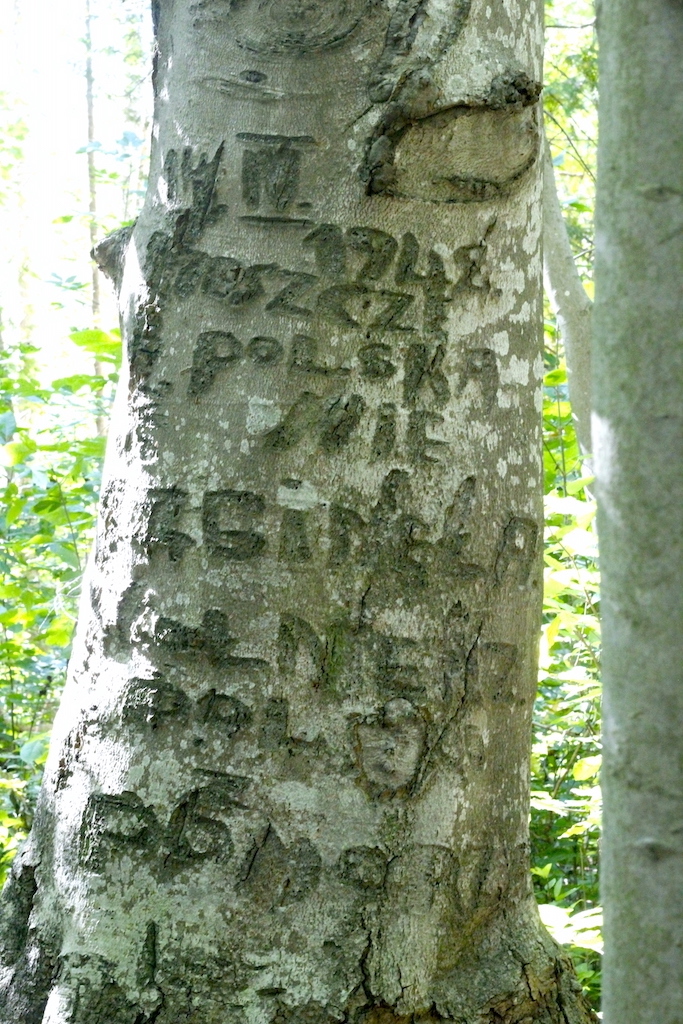
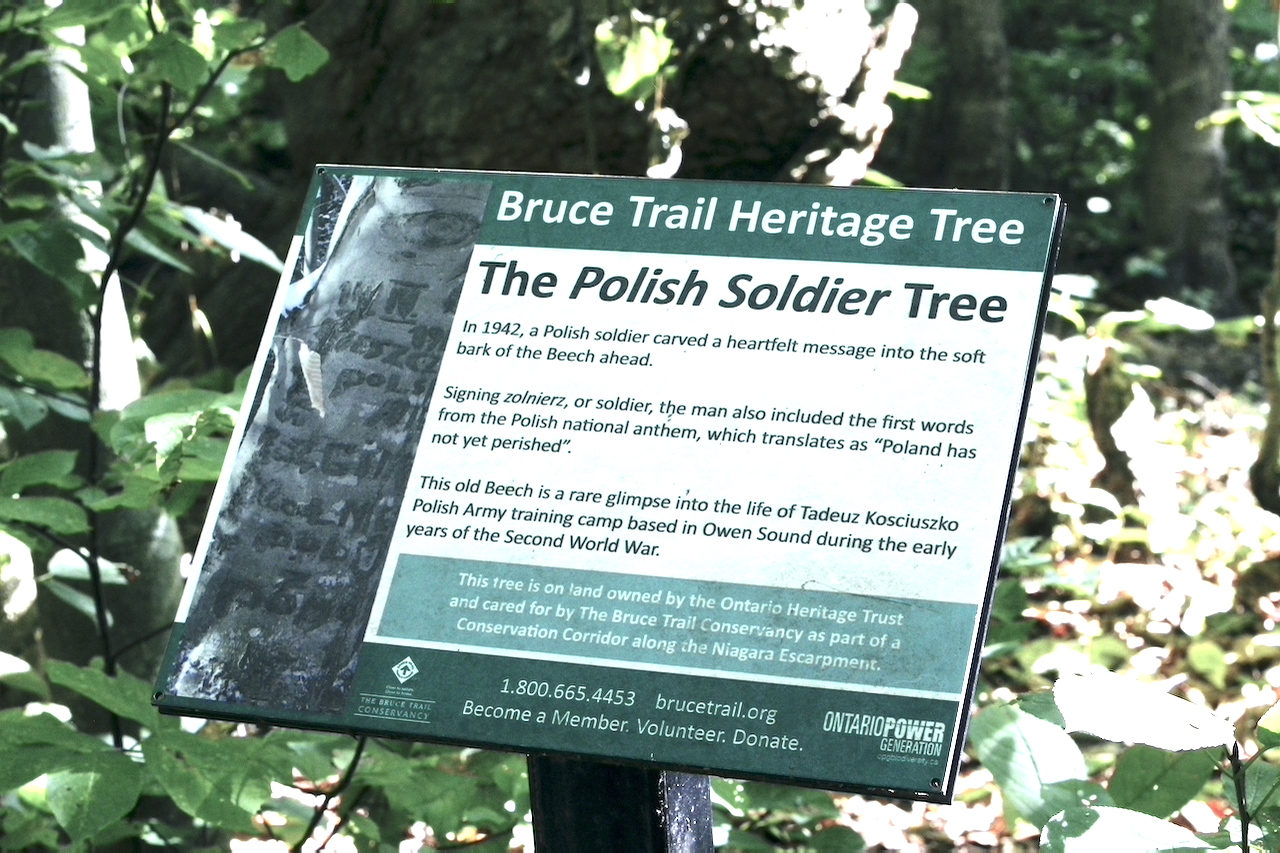
There are a few places to get some answers. The plaque to your right will offer a few immediate ones. The words are from the Polish national anthem, which translates as “Poland has not yet perished” or “Poland is not yet lost” depending on who you ask. It was carved in 1942 by a soldier who signed the carving with ‘zolnierz’ meaning ‘soldier.’ He had visited the tree during his time at the Tadeusz Kosciuszko training camp based in Owen Sound.
But if you want more of the story, I suggest you head down to the Billy Bishop Museum, like I did, and chat with the good folks there.
It was during a visit a few years ago, that I asked the director at the time Emily Jollife about the tree and she nodded and said ‘ah yes, the Polish Soldier Tree’ and began to tell me the story.

What I learned from Emily was that even though the markings were made in 1942, the tree wasn’t discovered until 2006 when Ron Savage was marking a new trail section for the Sydenham Bruce Trail Club. I wonder if there are other trees with carvings that remain hidden? There must be.
How did the soldier do it? Likely with his bayonet, I was told. He also carved “This Soldier will help” which is another part of the Polish National Anthem. He must have had a long enough break from his training to spend that much time. Maybe he was looking for a little forest therapy like I do from time to time and wandered deep into the woods with only his bayonet and a compass. For clarity, I don’t hike with a bayonet.
The full inscription is as follows: 14 IV 1942. Jeszcze Polska nie zginela. Zolnierz wola pomagac
After its discovery, the interest around this tree grew until it was finally recognized in its own exhibit. It was called Living Memory: Jeszcze Polska nie zginęła and drew over 100 people to its opening in May of 2019. It was even shortlisted for the Governor General’s History Award for excellence in community programming in that same year.
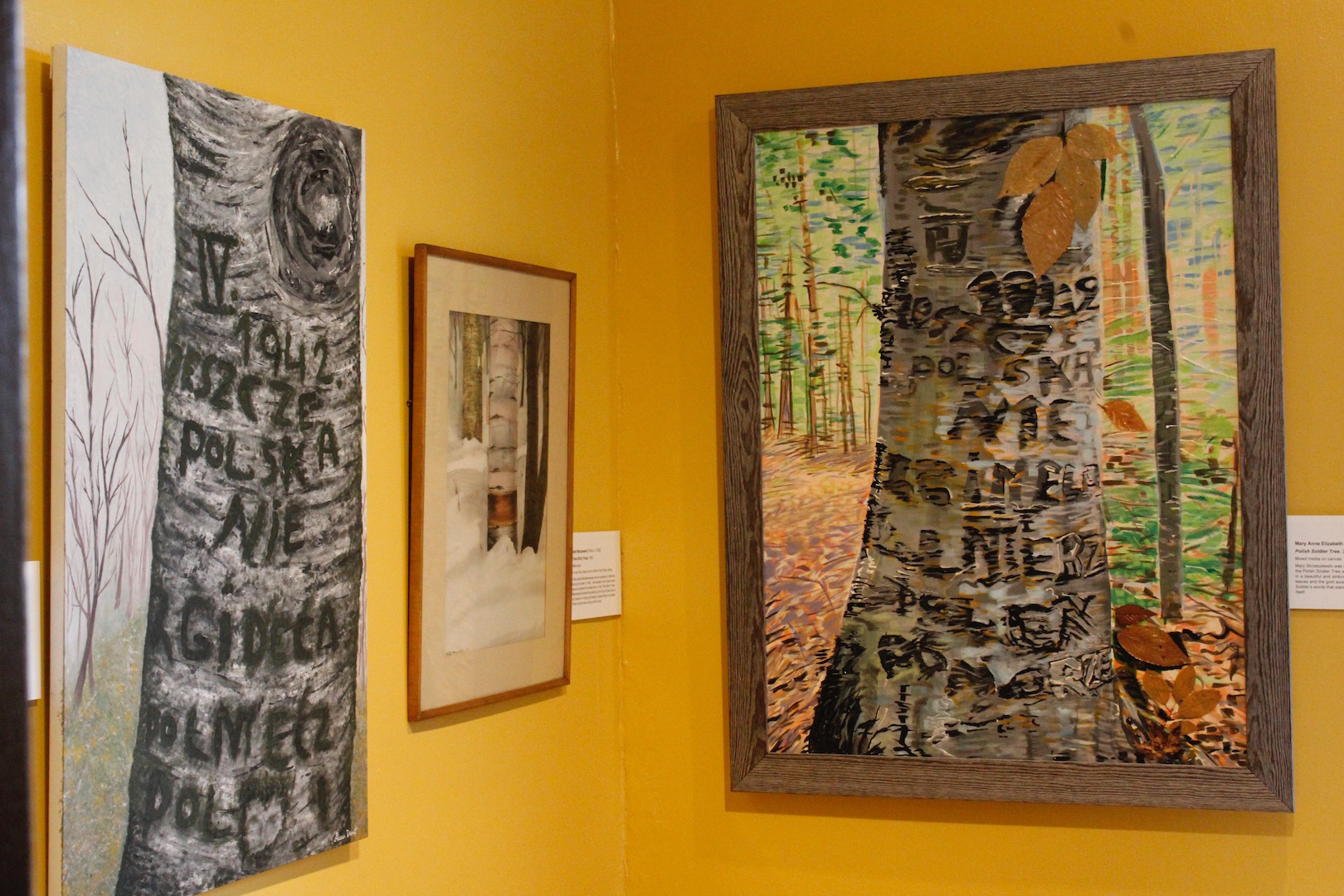
The exhibit made popular some of the stories surrounding the Tadeusz Kosciuszko camp and the soldiers stationed there. Apparently, crowds of Owen Sounders showed up at the train station to welcome the 700 Poles, who had arrived from Great Britain after being evacuated during the German Blitzkreig in 1940. Windsor had been chosen as the recruiting depot and Owen Sound as the training camp. The local community pitched in to make these lads feel at home: teachers at OSCVI offered English classes, St Mary’s Church held mass for them, and the Knights of Columbus organized social gatherings (source)
And the Poles were, in turn, appreciative of the area: “The camp location is beautiful. Owen Sound itself is wonderful, sitting on Lake Huron on Georgian Bay. Not too many people. Sort of like Wadowice or Zyweic. Good people, well-meaning, friendly.” (Source)
But their presence didn’t come without a few fist fights with the local dudes, who weren’t too keen on these handsome Polish men stealing all their gals, especially when the Polish custom was to kiss a woman’s hand upon meeting. Classy stuff.
Camp Kosciuszko operated from Sept. 1, 1941, to May 4, 1942 and after the war, some of the Polish soldiers who trained here actually returned to the area to settle. It must have made enough of an impression, I guess.
I decided it was time to go visit this tree again, especially since I’d heard it was dying. I put my newborn into a carrier and we took our first family hike along the Bruce Trail. You can enter the trail section right off Highway 26 but if you don’t like to walk along the highway, I recommend entering off Concession Road 8 and starting at the Pines Side Trail, which connects to the Main Trail after a short walk. It’s a beautiful hike and only about 20 mins to the tree.
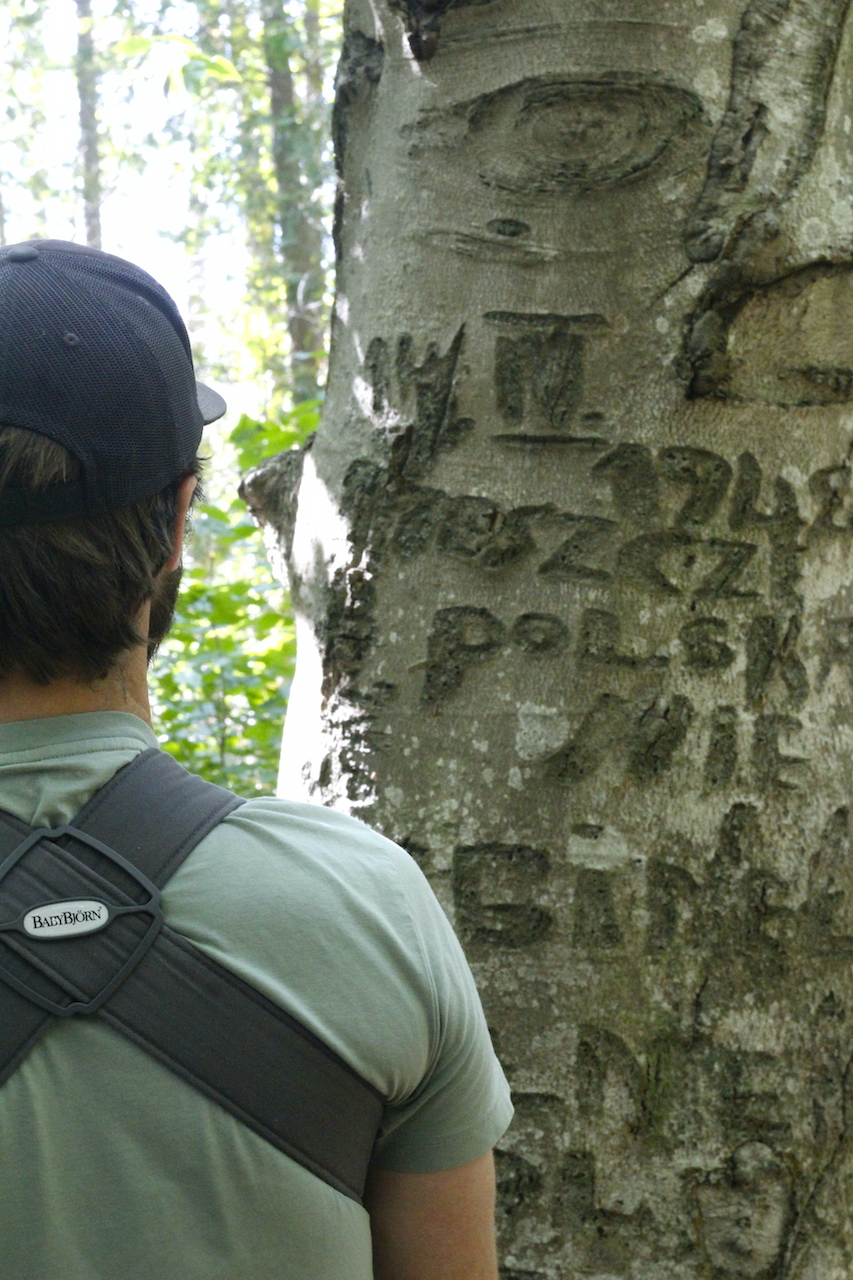
During this recent visit, I saw for myself how distressed the American Beech was and wondered what the right course of action would be to preserve a living historical relic. Can you remove the section that’s carved into for posterity? Doubt it. Can you create a relief of the carving? Likely. Maybe a cairn commemorating where it stood? Definitely doable.
I hope someone has a good idea. I look forward to carrying on the story of the soldier who wandered into the woods and left a piece of his Polish heart for us locals to find seven decades later.
So, for all you kids out there told not to carve into trees, maybe your markings will be a cherished site of historical value one day. Just be careful what you carve. I don’t think a marijuana leaf will be all that appreciated seven decades from now.
Written by Jesse Wilkinson