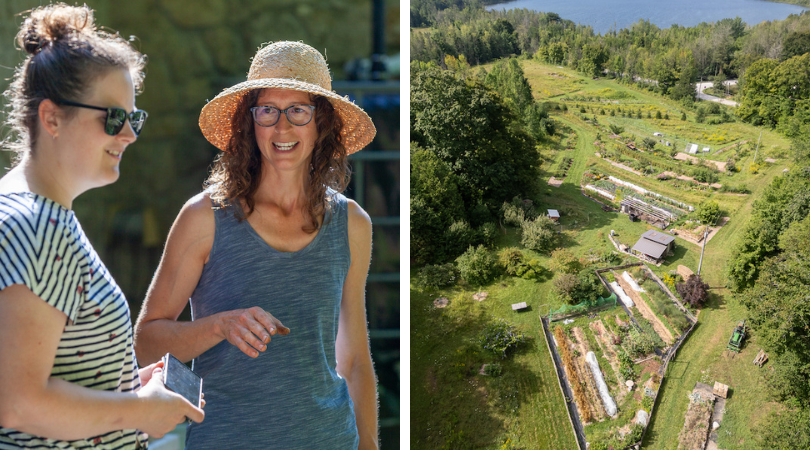

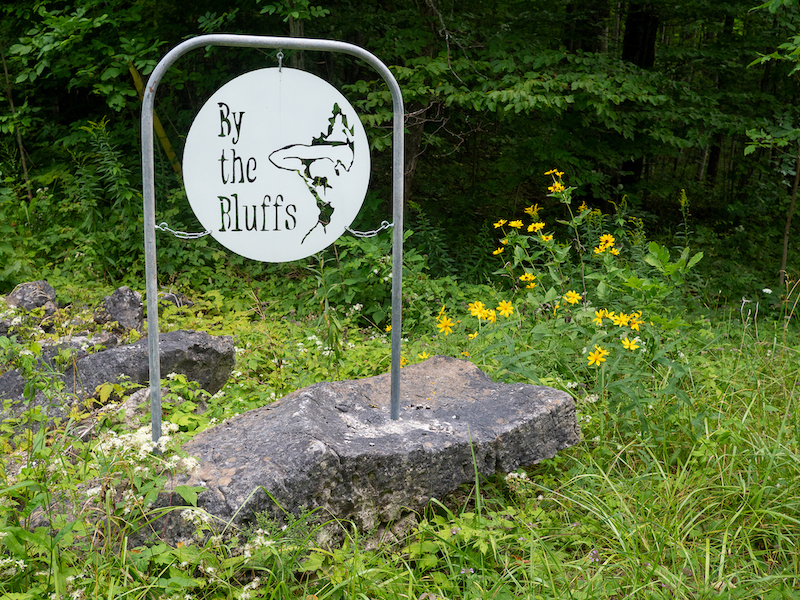
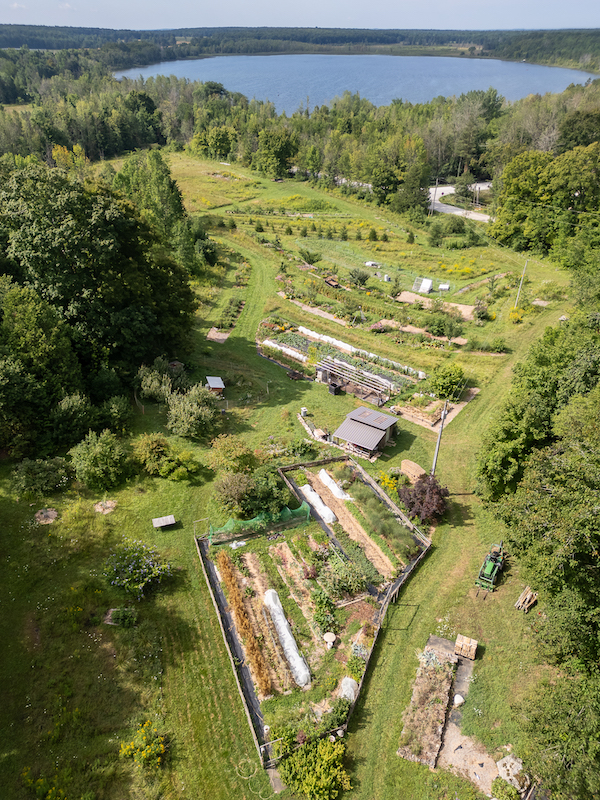
Tucked away in a lush, green corner of Georgian Bluffs is a native plant nursery named, fittingly, Rooted by the Bluffs. It’s also a sprawling gardens and orchard. And it’s also a labour of love led by Julie and Nathan, who started the project in 2018 after purchasing the property the year prior.
Along one planted row, visitors can spot infant peach trees, just a year old, toddler sand cherries entering their second year, and baby northern spice bush, just newborn from seed. To really understand what’s happening here, though, you need to look to the understory – where anise hyssop blooms fragrant and purple, cheerful black-eyed Susans sway in the breeze, and crimson beebalm tempts one hummingbird after another – or even deeper, because here at Rooted by the Bluffs, the story begins in the roots.

“To root means the point at which something begins its course or existence,” writes Julie on the About Us page of their website. “Roots resemble nourishment and connectedness. This represents the values at the core of our business.”
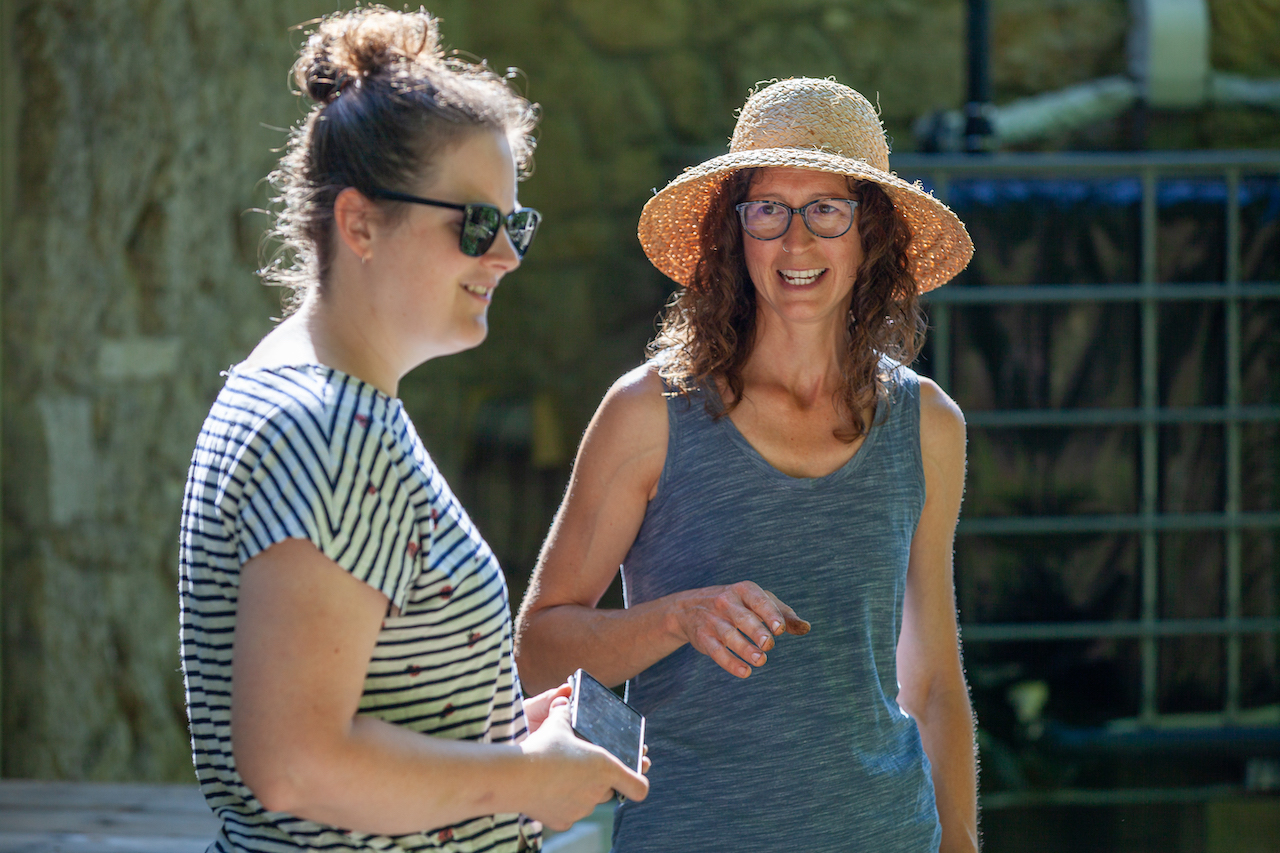
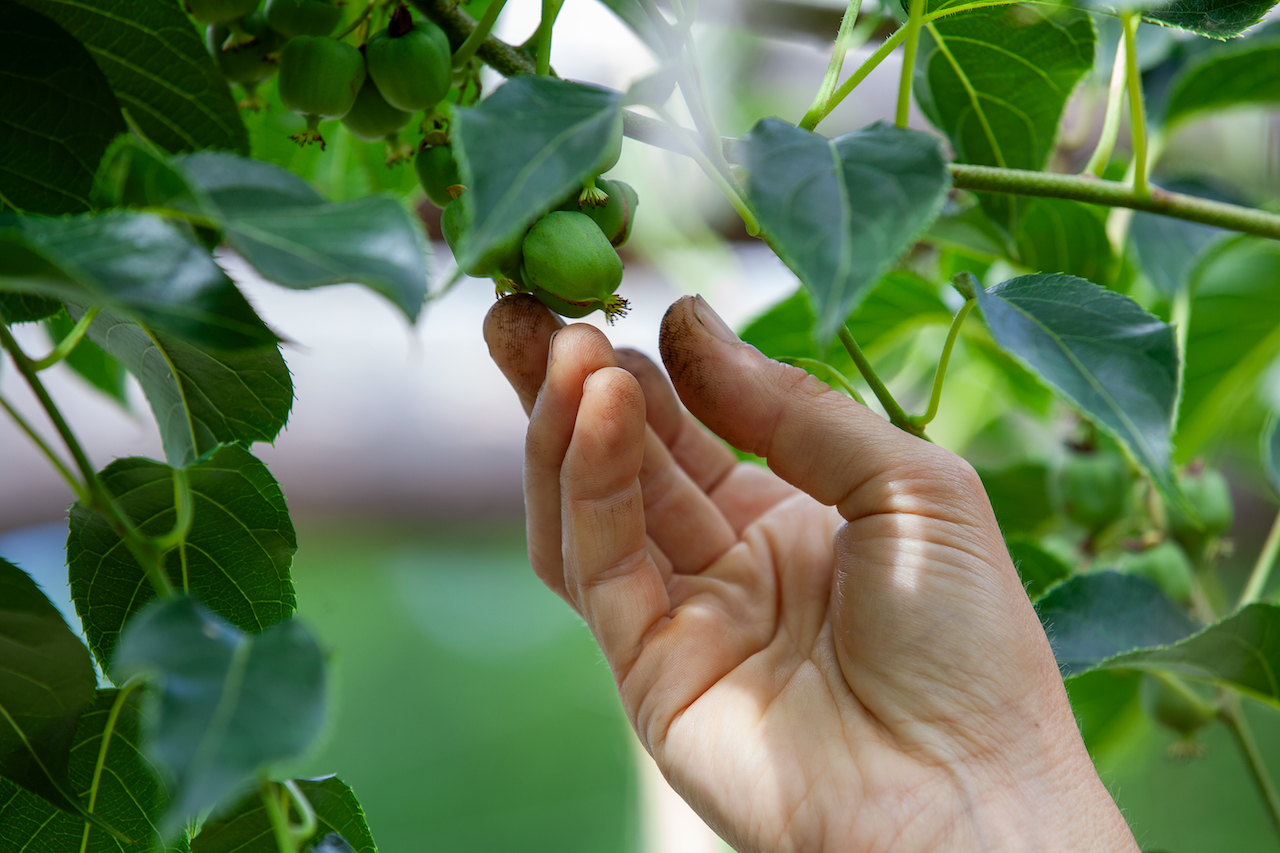
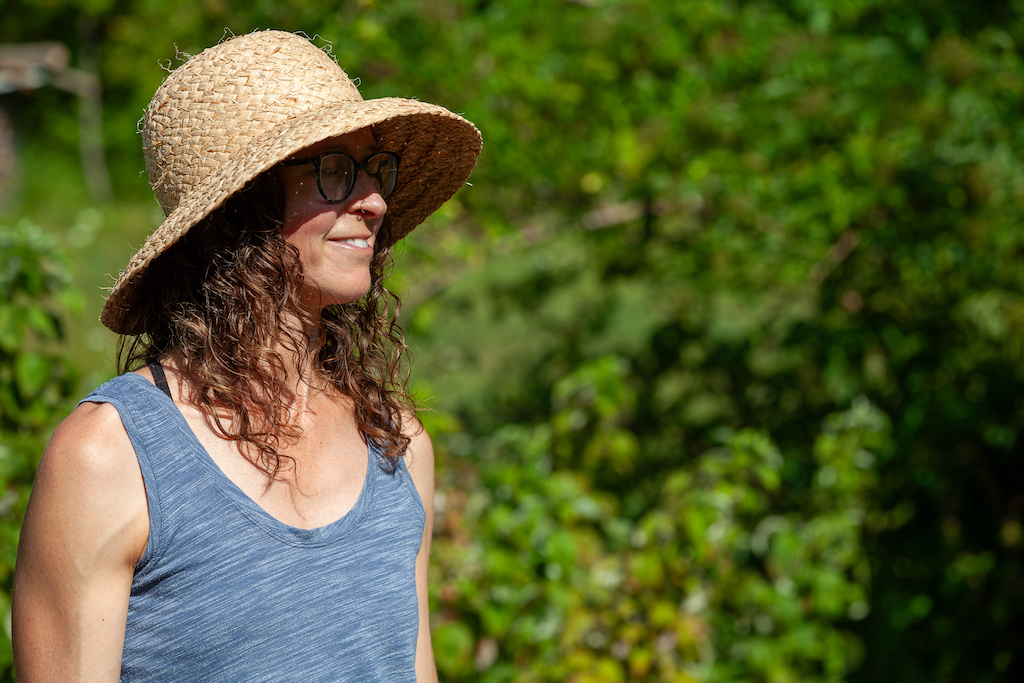
I stroll with Julie along the mowed paths and mulched garden edges, as she points out wild bergamot, pearly everlasting, Virginia mountain mint, and Kalm’s St. John’s wort. These are the foundation of this place. Long before the first fruit trees began to grow tall, heavy with plums, pears, and elderberries, Julie planted the understory. These plants would establish the ecosystem that would allow the future fruit trees to thrive.
“I started out by doing a permaculture design certification course back in 2017,” says Julie. “From there, I designed our property using those ethics and principles. I really wanted to focus on native plants. Permaculture is not necessarily focused on natives, but I know they’re so important to our ecosystem and the survival of insects and birds.”
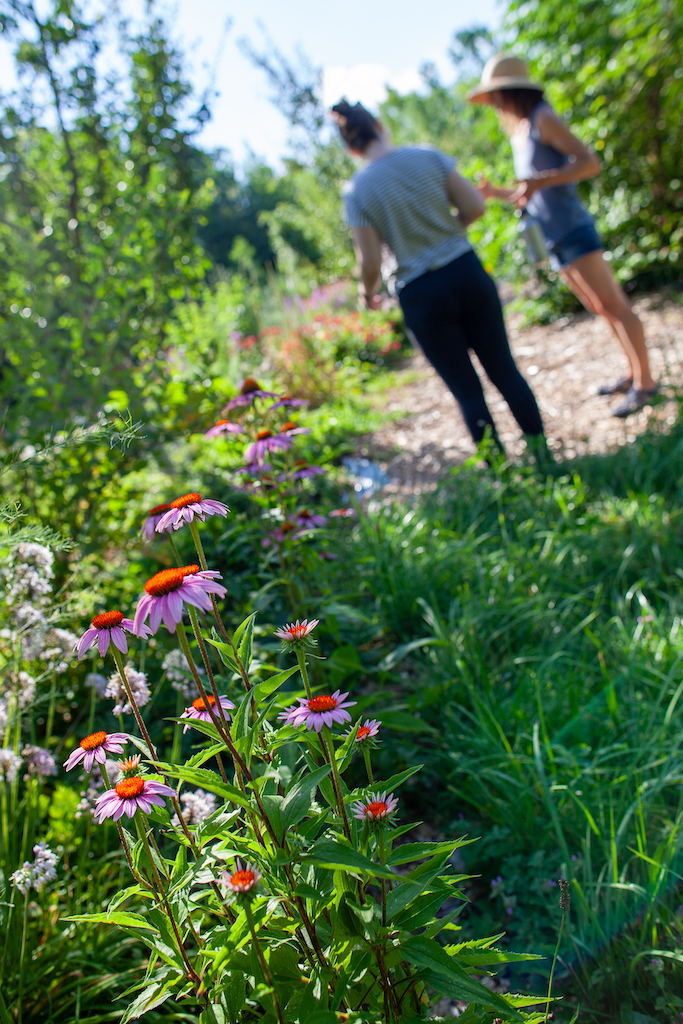
As if to prove her point, a huge bumblebee alights on a bergamot blossom by her foot.
“There’s nutrient cycling happening here,” explains Julie. “The plants provide nectar for the bees and insects and hummingbirds, and then as they go to seed, the birds come in and eat the seeds. When the plants die, they feed the soil food web.”
[Siderbar: Soil Food Web (noun): The network of organisms living in the soil that support the decomposition of organic matter and nutrient recycling.]Julie and Nathan began their nursery, selling native plant seedlings (many of which are very hard to find in traditional garden centres. Nurseries, Julie says, often sell nativars, cultivars created and selectively bred from native plants, which do not occur naturally in the wild and are therefore less likely to provide local insects with their needs), not long after starting their own understory. As their first fruit trees grew, so did their business. Now, with the property more established, the nursery is winding down. Julie is pivoting to consultation. She runs workshops here at Rooted by the Bluffs and also goes offsite to help others plan their gardens and orchards.
“A lot of my workshops focus on empowering people with hands-on experiences and knowledge so that they can develop a relationship with food that is affordable and sustainable and in balance with the ecosystem,” she says.
When you add diverse native plant life to your understory, she explains, you are increasing the diversity of your soil food web.
“Plants are what feed the web and the web is what feeds your plants, including your fruit trees,” she says. “So the plants are not only improving the soil food web, but they are also attracting predatory insects that feed upon some of the fruit tree pests. Some of the plants function as ground covers, others are fixing nitrogen in the soil. All of the plants provide nutrients and minerals back into the soil as they break down through the winter. Rather than adding compost to feed the fruit trees, the plants are doing that for me.”
Getting started involved waging war against invasives planted or introduced long before Julie and Nathan ever stepped foot here. The forest that runs alongside the gardens was full of English ivy and periwinkle. But Julie and Nathan weren’t battling alone.
“It’s so cool,” says Julie. “Where I removed all the invasive English ivy, what came up was trilliums and blood root, and other native ephemeral forest species that were just hiding out, waiting for their time. I didn’t have to seed anything. They were just there.”
Now in many areas, the natives are crowding out the invasives, and the periwinkle is nearly a thing of the past.
The understory, too, is changing. With increased shade from the ever-larger fruit trees, shade-tolerant plants like wild ginger and Solomon’s seal are taking root. Some plants, originally introduced in one area, have relocated themselves to another that suits them better.
“Nature’s not tidy,” says Julie. “As you let things go, things spread, and it gets to be that sort of more messy, natural native look. Some things will die, some things will live.”
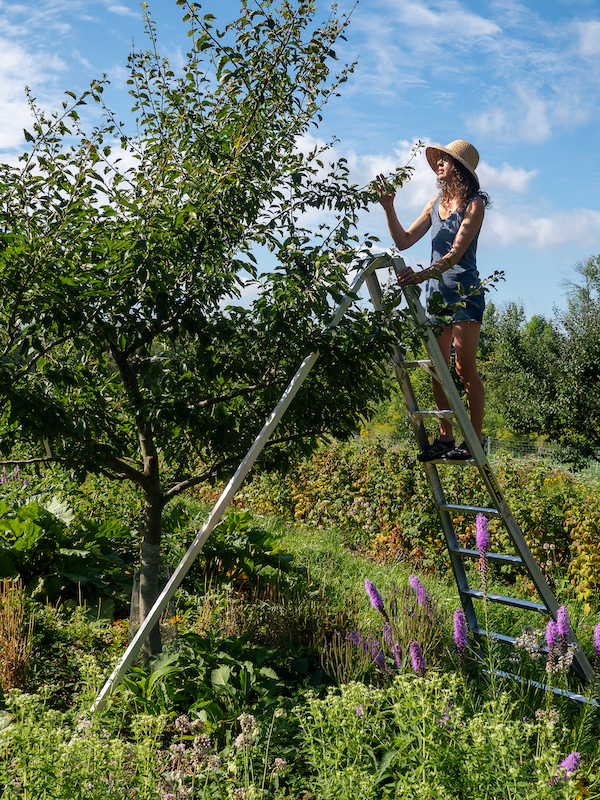
She climbs a ladder to get a look at a plum tree and discovers black knot fungus, which spreads from choke cherry trees in the forest and infects the tree’s vascular system. She’ll prune back the infected branches and use holistic spray to get the infection under control before it can worsen.
“With fruit trees,” she says, “a lot of people think they’re a simple thing to grow, but they’re not. They get a lot of diseases, a lot of insects and pests, so it’s important to teach people how to keep their trees healthy, including feeding the soil food web.”
It’s why everything here starts from the roots, and why Julie and Nathan have poured so much time and love into the soil under their feet: The bumblebee on its bergamot perch, the hummingbird sipping from beebalm, Nathan cutting planks by the house, Julie on her ladder, a young dogwood, and a new bit of greenery in the understory, sending down roots – all these are playing their role in this complex and thriving ecosystem, telling the story at the same time.
Words by Caeli Mazara
Photos by John Fearnall of Good Noise