
Tara, ON isn’t typically the spot most of us would imagine when thinking about artistic hubs, but there’s a specific kind of buzz emerging in the small Grey Bruce town lately. It is a place that, over the last decade, has suddenly become surprisingly young.
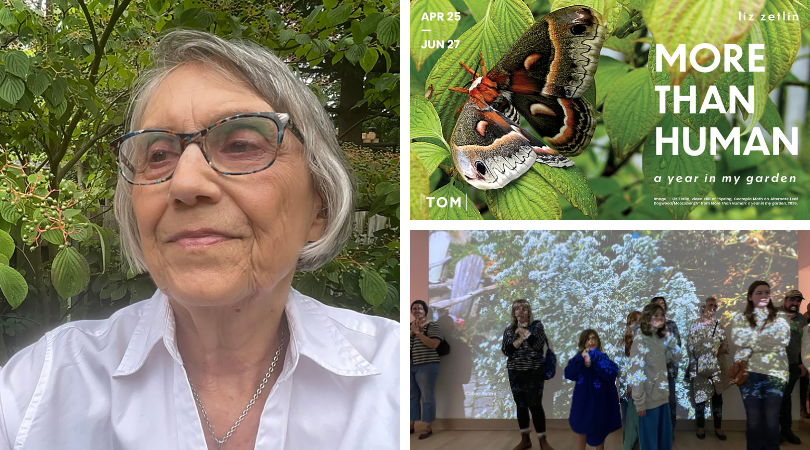
Among this new wave of creative energy is Bianca Artemida Nam, an artist who recently traded the urban sprawl of Toronto and Mississauga and decided to Tarry Awhile in the quiet, overgrown beauty of eastern Bruce County. Since moving to the area in August of 2024, she has been busy carving out a niche for herself within the local artistic community.

We sat down on a Friday to discuss her latest work, her process, and why a swamp in Shelburne became the catalyst for some of the most striking installation art we’ve ever seen at the Tom Thomson Art Gallery.
Artemida Nam’s journey as an artist took a definitive turn during her time at OCAD University. Having started as a painter, her collegiate experience was interrupted by the 2020 pandemic. Like many, she found herself confined to her home, but for Artemida Nam, this limitation became a gateway to a new medium: installation and collage.
Under the mentorship of Vladimir Spicanovic, a Professor in the Faculty of Art at the University, Nam began to look at her immediate surroundings differently. At the time, she was living in Shelburne on a property that featured a large pond—or more accurately, a damn swamp.
“I was drawn to it,” she says. “It was very beautiful, I found it very peaceful during such a time when you’re just confined to your own home. And it became the inspiration for the installations I started making at that point.”
This wasn’t a pristine, landscaped pond like you might imagine gracing the centre of some Victorian garden; it was overgrown with lily pads, reeds, and invasive species. It was messy, organic, and perfectly peaceful—a stark contrast to the jarring reality of a global pandemic.
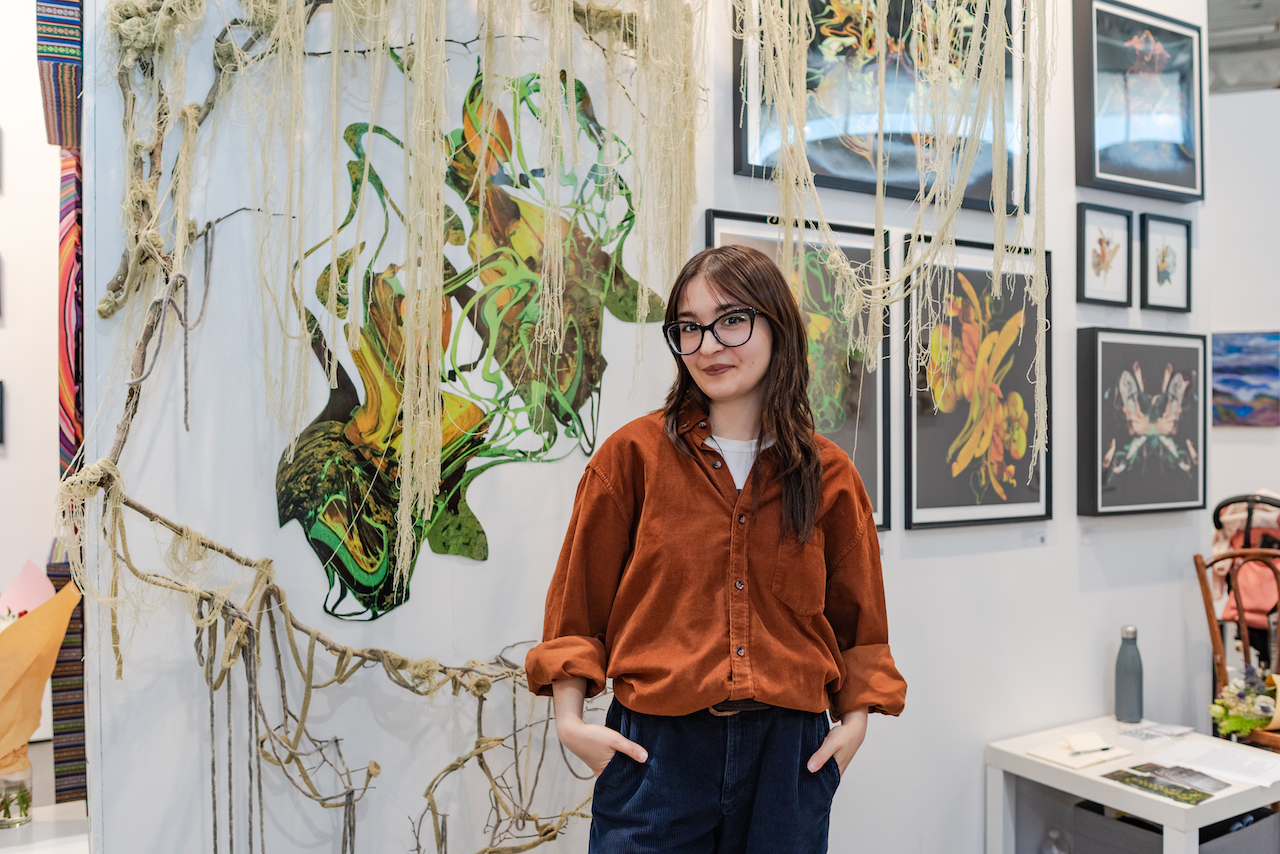
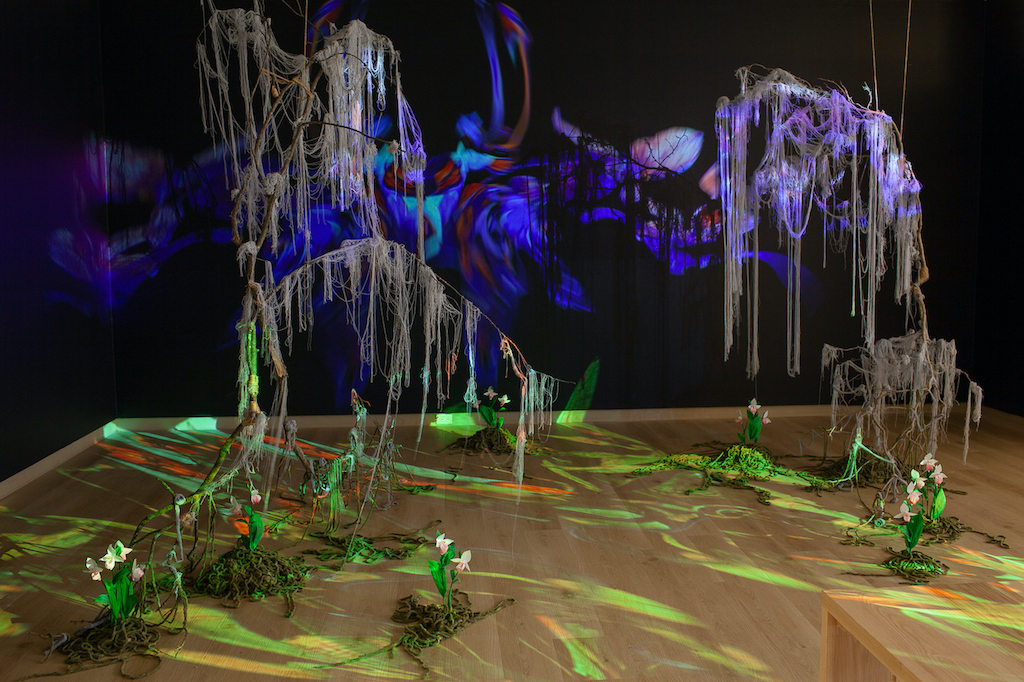
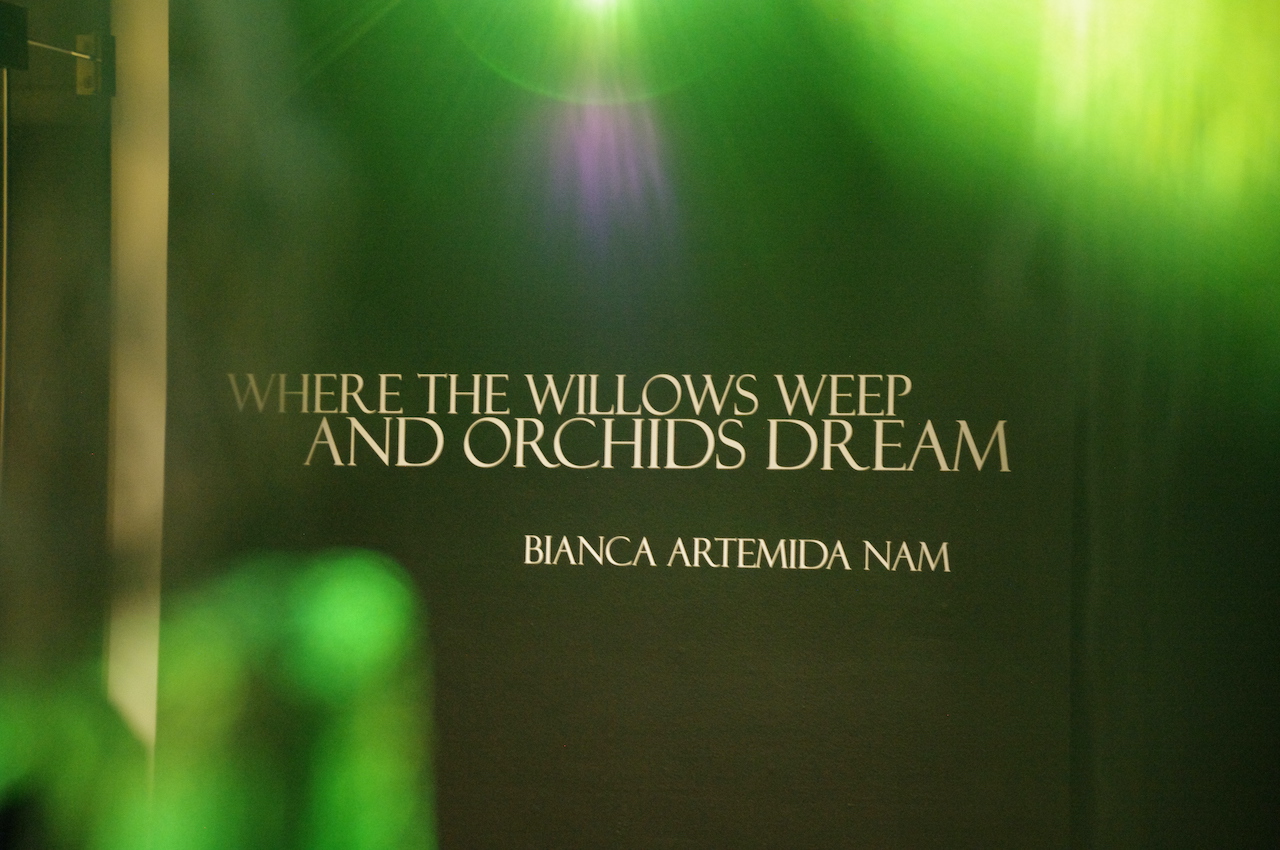
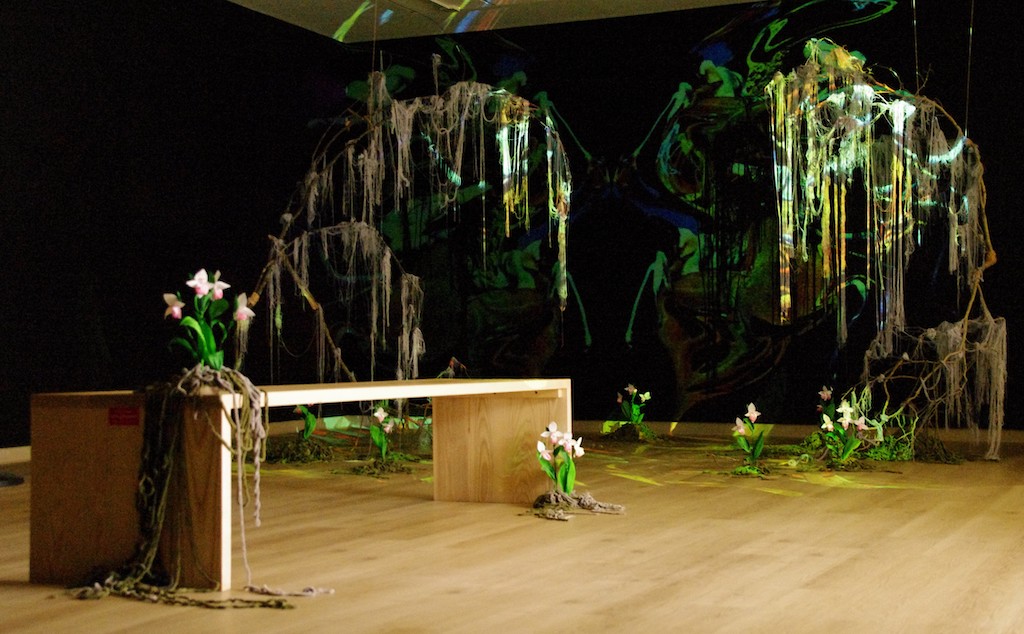
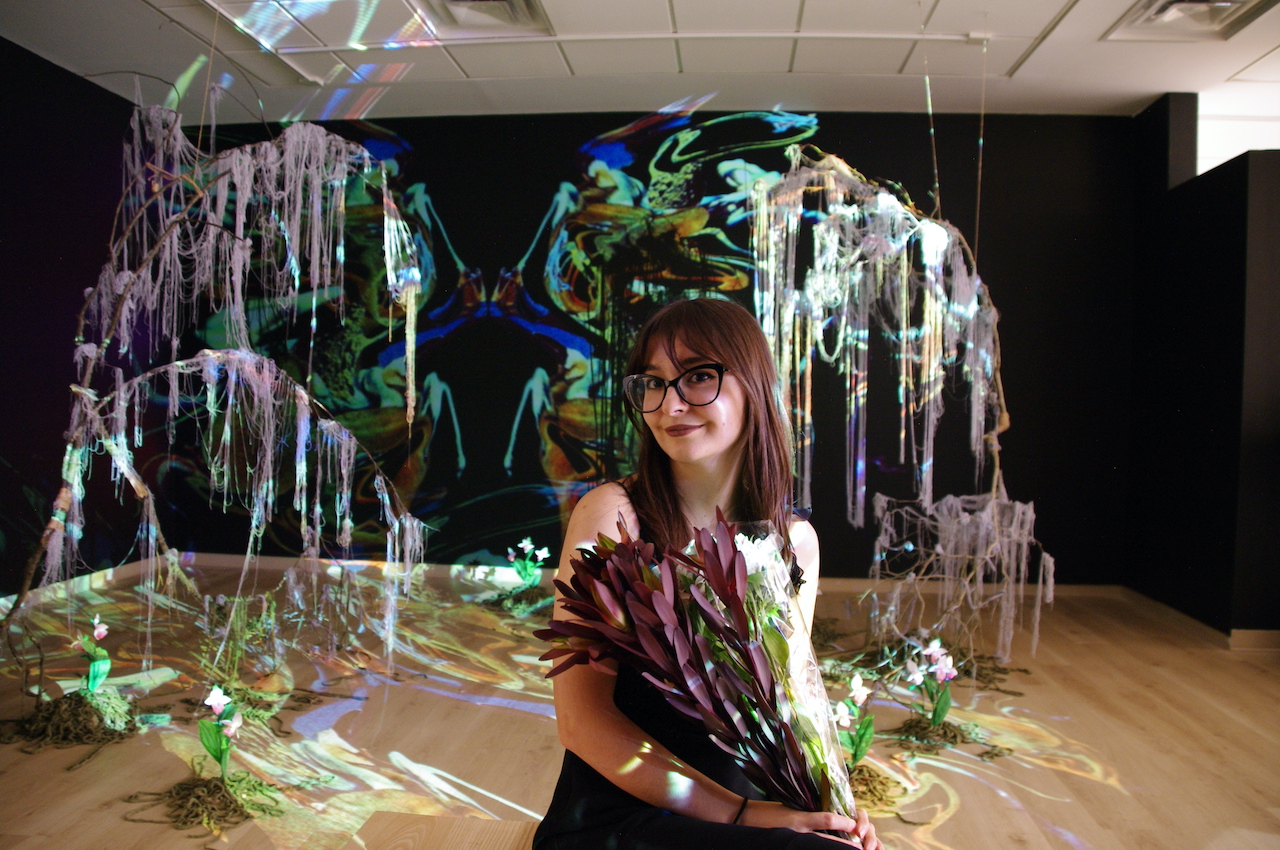
When you look at Artemida Nam’s work – specifically her recent solo exhibition, Where the Willows Weep and Orchids Dream – you see a complex tapestry of textiles, projections, and sound. But the physical construction is only half the battle. Nam’s creative process begins with something many of us can relate to: deep thought that looks a lot like doing nothing.
“I’d like to say procrastination is the first part of my process where I have to think about it a lot and talk to people about the idea, and then once I’ve done that quite a bit, I’m ready to bake everything,” she admits.
Once the idea is “baked,” the labour begins. This involves forging branches from the Bruce and Grey County landscape, which she then weaves and ties together to create the skeletal forms of weeping willows. These are then “dressed” in the gallery space with yarn, creating a root-like mycelium that creeps across the floor.
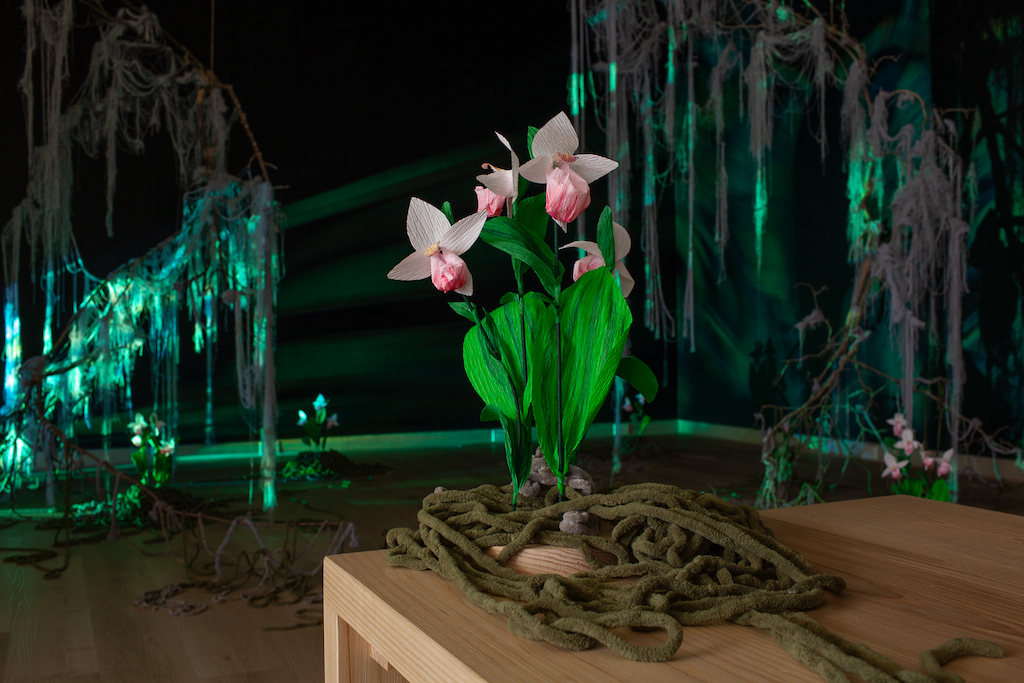
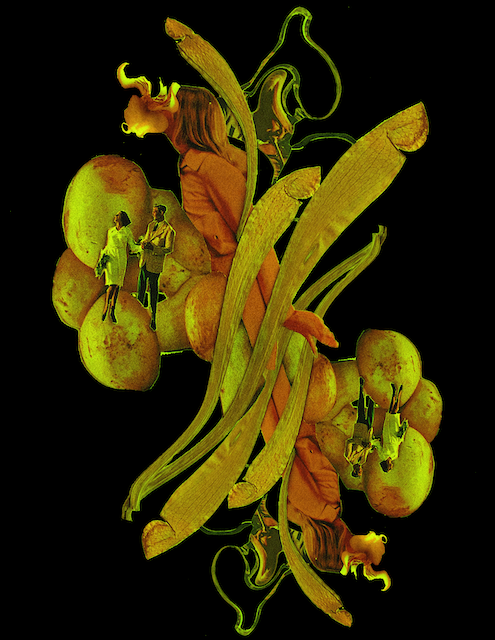
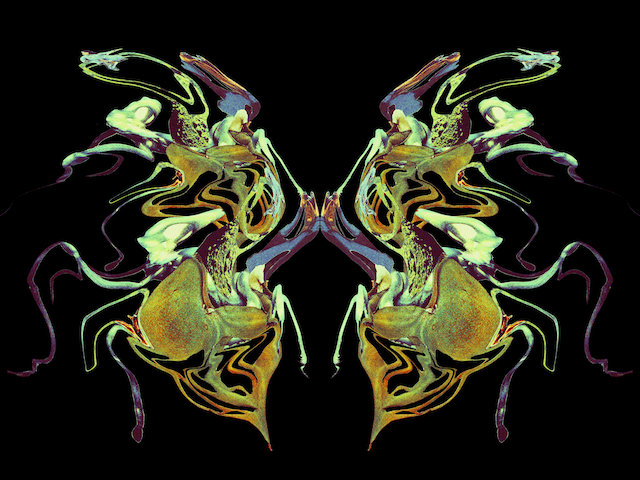
While the physical structures are forged from the earth, the visual heart of the installations is all digital. Bianca uses a unique “analog-to-digital” pipeline; she starts by scouring old National Geographic magazines, creating physical cut-and-paste collages of organic forms. These are then scanned into Photoshop, where she transforms them into what she calls “vibrant hybrid organisms.” The level of curation here is staggering. For her show at the TTAG, she created roughly 300 different colour variations and layered compositions.
“I chose which I think are stronger versus not, and usually I’ll choose maybe about 6 images total that will end up in the final,” she says. “It shows that in that moment I really enjoyed making those images because it’s very accessible for me to just save as many as I want and tweak them in little ways.”
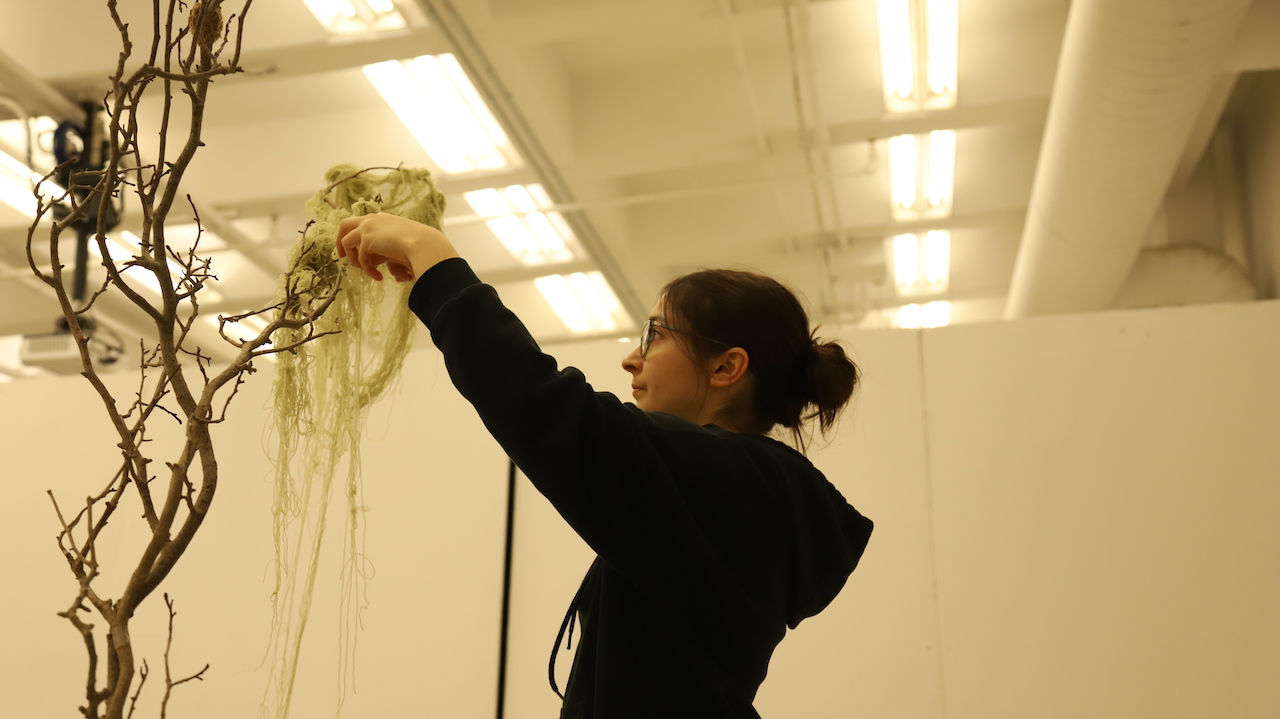
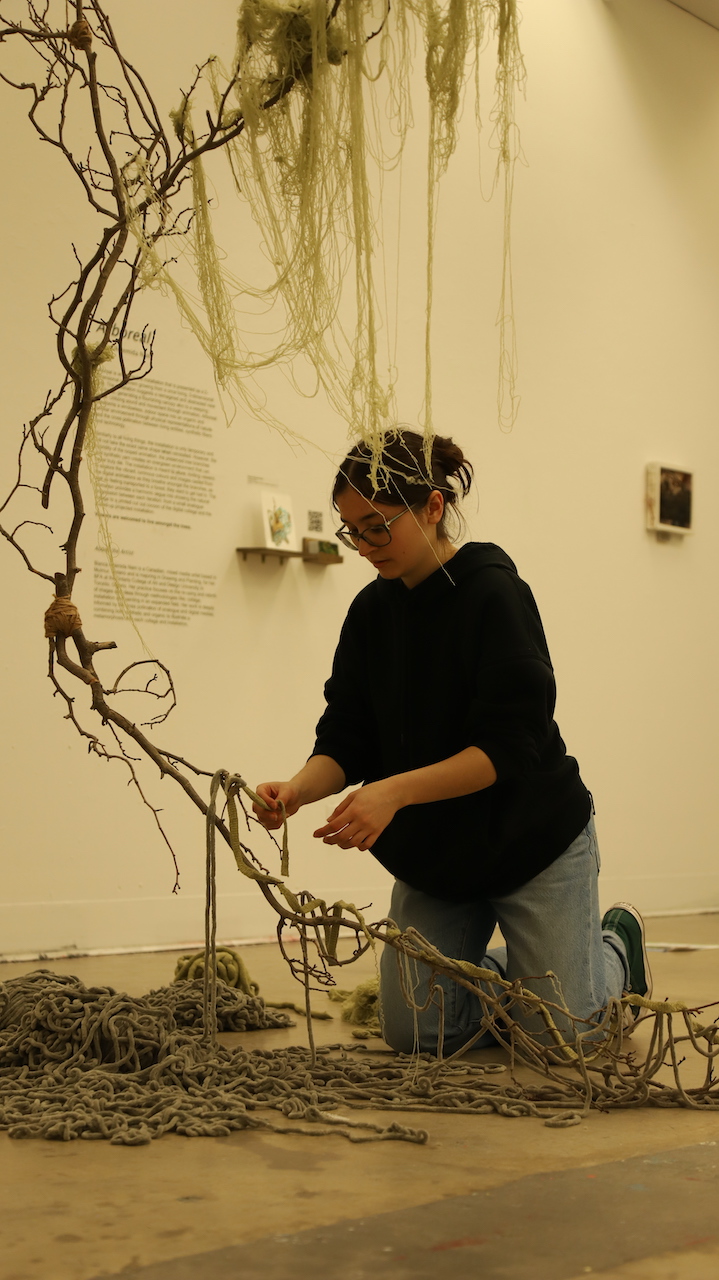
These final six images are then animated to look as though they are breathing or morphing, then projected onto the yarn-draped willow trees in the space. It’s a stunning marriage of the tactile and the ephemeral. In a world increasingly obsessed with AI and purely digital creation, her work feels like a necessary tether to the physical – and as the co-owner of an old school printed magazine, that makes a lot of sense. She views her installations as “ever-living beings” – forms that are brought to life and preserved by technology – not validated or optimized by it.
“How do you merge the two together in a way that’s ethical, especially in the age of AI,” she ponders. “But also in a way that’s true to yourself, and yeah, I’ve always thought of it as a marriage between two different ideas. But also being open to new terrain.”
This new terrain includes a heavy emphasis on immersion. She wants viewers to sit with the work, to walk through it, and to feel welcomed—even if the sharp forms of the trees or the dark gallery space feel a bit “ominous” or “creepy.”
The final layer of Artemida Nam’s ecosystem is the audio. For her recent show, she utilized royalty-free steel drum melodies, which she then deconstructed by playing with pitch and rhythm. She describes the result as having a “feminine vibe” – melodic, but abstract.
“I wanted it to be a sound that was organic and a little bit ominous, but also comforting and could put you to sleep and be very relaxing… I like the juxtaposition between the two.” She admits that when you spend hours installing the piece, the repetitive loop can either put you to sleep or drive you slightly mad, but for the viewer, it completes the transition from a gallery room to a fantasy swamp.
As Bianca settles into her life in Tara, she is already looking for ways to bridge the gap between her physical installations and the readers who may only see them on a page.
“It’s something that’s very unique, and it’s an experience that cannot be captured well enough, digitally, as something you have to experience… I want people to be there and be present with the work.”
In an effort to help immerse our readers in her work, scan the QR code in this feature to access a Rrampt-exclusive audio experience so you can take in a more fulsome version of her artistic ecosystems from your couch; because we’re cool like that.
Beyond the gallery, whether she’s sawing branches in the woods or editing 300 versions of a digital leaf, Bianca Artemida Nam is proof that the most exciting art in Grey Bruce is often found where the digital world meets the swamp.
–
Check out her work at biancaartemidanam.format.com